November 5, 2014 POLICE OFFICER SHOT IN EAST ORANGE John del Giorno is live in Chopper 7
EAST ORANGE (WABC) --
Authorities are on the scene where suspect allegedly shot an East
Orange police officer this morning. The shooting happened along
North Oraton Parkway near New Street shortly after 11 a.m. The
bullet appears to have been stopped by the bullet resistant vest and
has not punctured the skin, officials said. He was taken to
University Hospital in Newark, where he is reported in good
condition. Police apprehended the suspect and his weapon has been
recovered.
Update:
A veteran East Orange police sergeant is recovering after being shot
Wednesday during a confrontation with a suspect. The shooting
happened along North Oraton Parkway near New Street shortly after 11
a.m. The bullet, which struck in the stomach area, appears to have
been stopped by the officer's bullet resistant vest and has not
punctured the skin, officials said. (Photo: Police Chief William C.
Robinson talks with reporters about the shooting incident of Sgt. Mike
Williams)
The sergeant, identified as Mike Williams, joined the department in
2002. Eyewitness News has learned Williams' partner drove him to
University Hospital in Newark, where he is reported in good
condition. Police apprehended the suspect and his weapon has been
recovered. The Essex County Prosecutors Office is investigating. The
suspect, 29-year old Robert O'Neil, of East Orange, is facing
multiple charges, including attempted murder and unlawful possession
of a weapon.
Update:
By Dan Ivers | NJ Advance Media for NJ.com
EAST
ORANGE — A city police officer was struck once in the stomach during
a gunfight with a suspect this morning, but was saved by a
bulletproof vest, authorities said.
Sgt. Mike Williams, a 12-year veteran, was on patrol in the area of
North Oraton Parkway and New Street when he attempted to stop a
bicycle for a routine “quality of life” violation when the shots
rang out just before 11:30 a.m., Acting Essex County Prosecutor
Carolyn Murray and East Orange Police Chief William C. Robinson told
reporters this afternoon.
The suspect,
29-year-old Robert O’Neil, fired an automatic weapon at Williams,
striking him in the stomach area, Robinson said. The bullet was
blocked by Williams’ bulletproof vest, though he was still injured
by its impact. He returned fire, and O’Neil fled through the
neighborhood, though Williams was able to radio fellow officers as
to his location, and O’Neil was quickly apprehended, according to
Robinson. The automatic handgun was also recovered nearby. Williams
was taken to University Hospital in Newark to be treated, though he
was expected to be released and return home to his family today.
"(The vest) probably saved his life," Robinson said. O’Neil, of East
Orange, is charged with attempted murder and various weapons
charges, and also had an outstanding warrant for his arrest, Murray
said. The charges pertaining to the warrant were unclear. The exact
circumstances that led to the exchange of gunfire were unclear as of
about 2 p.m. Robinson said Williams is a member of an East Orange
unit that deals with gang, guns and drug issues that are authorized
to make so-called “quality of life” stops to stop any suspicious
activities. (Photo Right: Suspect Robert O'Neil)
However, similar stops can also be made if the bicycle had been
reported stolen, or if a rider is travelling the wrong way on a
one-way street, according to Robinson. “It’s basically a safety
issue for the community,” he said. Immediately after the incident, a
bicycle, baseball cap, jacket and cell phone were still on the
ground at the intersection of New Street and North Oraton Parkway
while detectives collected evidence and interviewed neighbors. The
Essex County Prosecutor’s Office will investigate the circumstances
surrounding the shooting, as it does whenever police officers fire
their service weapons, according to Murray. Robinson said the police
force was especially relieved that Williams, who was recently voted
“Officer of the Month” by the department’s executive committee, is
expected to make a full and speedy recovery. “It’s something that we
always know can happen, but when it happens you feel very deep, and
very supportive about it. We’ll do whatever we can to support him
and his family,” he said.
Paste below link in your browser to follow
video's of this shooting incident.
April 18, 2014 Three East Orange men charged in Passaic home invasion By ABBOTT KOLOFF staff writer
PASSAIC/East Orange —
Three East Orange men who police say tied up a victim at gunpoint
before ransacking his home last month were charged on Friday with
robbery and kidnapping, authorities said. Santos Casiano-Nufio, 23,
Feliciano Ezquivel, 37, and Cesar Agusto-Perez, 30, forced their way
into a Third Street residence on March 13 and st and took from the
victim’s pockets and other rooms of the home, Detective Lt. Gabriel
Guzman said.
The three men share a residence in East Orange where two of them,
Casiano-Nufio and Ezquivel, were arrested Friday afternoon, Guzman
said. Agusto-Perez was in custody of the East Orange police on other
charges Friday and was expected to be transferred at some point to
Passaic, Guzman said. East Orange police did not provide information
about those charges on Friday. Passaic Detective Alex Flores found
evidence at the suspects’ home on Thursday that tied them to the
home invasion, Guzman said. Guzman did not disclose the nature of
that evidence. One of the men was in possession of a handgun during
the crime, he said. He did not identify that suspect. Police also
did not say what items were taken from the victim’s home.
All three of the accused are were charged with robbery, conspiracy to
commit robbery, and kidnapping, all first-degree crimes, Guzman
said. They also are charged with burglary, unlawful possession of a
weapon and possession of a weapon for an unlawful purpose, all
second-degree crimes, he said. Bail was set at $450,000 each for
Casiano-Nufio and Ezquivel, who were expected to be transferred to
the Passaic County Jail, Guzman said. He said that bail is expected
to be set for Agusto-Perez after he is transferred to Passaic.
Monday, March 10, 2014 Eyewitness News Woman Found Dead in East Orange In Apparent Murder
EAST ORANGE (WABC) -- Authorities are investigating the apparent
murder of a woman found dead in East Orange Monday morning. At about
9:30 a.m., officers responded to the 300 block of Park Avenue where
the woman's body was found near an apartment building.
She has not yet been identified.
The cause of death is pending an autopsy, but the case is being
investigated as a homicide by the East Orange police and the Essex
County Prosecutor's office. Anyone with information is asked to
contact the Essex County Prosecutor's Office Homicide/Major Crimes
Task Force tips line at 1-877-847-7432.
Saturday March 22,
2014
EOPD disciplinary hearing involves Irvington PD By: Chris Sykes - Staff Writer
IRVINGTON — The Irvington Police Department is playing a role in a
police officer’s disciplinary hearing procedures in East Orange. On
Wednesday, Jan. 8, a public disciplinary hearing was held for East
Orange Police Department Officer and PBA President Elaine Settle at
EOPD headquarters. Settle is facing a five-day suspension from her
job because, on July 18, 2013, she signed off on an order to
releasing a suspect in Irvington Police Department custody on her
own recognizance.
Brielle Concepcion had been detained by the Irvington police on a
warrant for a traffic violation out of East Orange. On July 18,
2013, the Irvington Police Department asked the East Orange Police
Department to transport Concepcion to East Orange to answer for the
warrant on which she had been arrested. At the hearing, Settle
admitted to authorizing Concepcion’s release on her own
recognizance, with a new scheduled court date in the East Orange
Municipal Court. According to her superiors, Settle signed off on
the Release on Recognizance order with the signature of James Moss,
the deputy court administrator. Moss later said he had never given
Settle permission to do so without first contacting him.
Concepcion is Moss’s niece by marriage. In order to prove to his
superiors he had not done anything unethical, Moss wrote a letter
stating he had not given Settle approval to use his signature in
Concepcion’s specific case. This resulted in the charge against
Settle, although Moss admitted in testimony at her Jan. 8 hearing
that he had given EOPD officers blanket approval to use his
signature on “minor offenses” with the caveat that “they just had to
let him know about it later.”
This blanket approval was what Settle’s lawyer, Timothy R. Smith of
the law firm Caruso, Smith, Picini of Fairfield, repeatedly brought
up at the hearing to Deputy Chief Thomas Koundry, Settle’s East
Orange Police Department hearing officer, and the department’s
“prosecutor” from the Internal Affairs Bureau. Smith said it was
unfair to punish his client for doing what had been regularly
carried out for years, just because a relative of Moss was involved.
Smith alleged that Settle had been singled out for prosecution due
to her role as the current PBA president and because Moss’s niece
was involved. He also said Moss seemed more concerned about proving
he wasn’t doing personal favors for his family members than about
allegedly authorizing EOPD officers to violate rules for processing
prisoners and suspects already in custody.
“She’s unequivocally innocent here for the reasons that I said on
the record,” Smith said at Settle’s hearing. “Despite everything I
said during the hearing, James Moss is a good person and my client’s
a very good person. They both epitomize people who take their jobs
very, very seriously and are very, very conscientious and diligent
in doing their jobs; both of them. But I think what you had here was
a systematic problem. You had rules and regulations that weren’t in
place from the top down.
“And then there was a problem that developed and, as is often the
case when you deal with bureaucracy in government, when you have
those situations arise, scapegoats develop, and people try to point
the fingers at people who weren’t responsible for the systematic
breakdown for not having an appropriate system in place. And that’s
what happened here.”
Irvington Police Chief Michael Chase said Smith was right. Chase is
currently appealing his suspension by Irvington Police Director
Joseph Santiago for multiple alleged violations of the state
Attorney General’s Guidelines for the operation of police
departments in general, and Internal Affairs in particular.
Moss and
several officers who testified at Settle’s hearing, as well as her
lawyer, noted that both the East Orange Police Department and
Municipal Court have informally changed their policies for releasing
suspects on their own recognizance, although there still is no
formal policy currently in place within the
EOPD.
The East Orange
Police Department announces the arrest of an individual responsible
for an attempted robbery of the Family Dollar Store on Springdale
Avenue. 04/22/2013 (Source: East Orange Police Dept.)
Monday, April 22, 2013
By Seth Augenstein/The
Star-Ledger
A 26-year-old man who allegedly robbed a
dollar store at gunpoint was tracked
down and caught by detectives within
minutes of the crime, police say.
Cameras caught nearly all the action.
Khaiuan Purnell, 26, walked into the
Family Dollar Store on Springdale Avenue
Monday morning at 10 a.m., police say.
Purnell then pulled out a black handgun
and demanded all the money in the
register, said Sgt. Andrew DiElmo.
The dollar-store clerk triggered the
silent alarm, and told Purnell so,
DiElmo said. Purnell then fled the
store, authorities say.
In less than a minute, police had
responded to the store and had a
description of Purnell. The city’s
widespread anti-crime cameras began
canvassing the area for a person
matching the description – and that
person was spotted heading east on Park
Avenue, DiElmo said.
What happened next is caught on those
same cameras. Officers converged on the
area, and two detectives parked their
car in front of the suspect, who began
to run. Detective Anthony Peters runs
out of the car and does a flying tackle
in the middle of the street, sending the
suspect’s gun flying out of his
waistband. Police then cuff Purnell and
take him to a patrol car.
Purnell was charged with robbery,
unlawful possession of a weapon,
possession of a weapon for an unlawful
purpose, obstructing the administration
of justice, resisting arrest by flight,
and resisting arrest by force, DiElmo
said. Purnell is currently awaiting an
arraignment on $150,000 cash bail,
DiElmo added.
The cameras that were used to catch
Purnell have been a vital tool to catch
suspects — and even to prevent crime,
authorities say.
“This is just another example of the
East Orange Police Department’s combined
efforts between the uniformed and
investigative units, as well as the
utilization of technology that brought
this individual and others whom choose
to commit crimes with the city’s borders
to justice,” said Inspector Thomas
Koundry, the acting chief. “We will use
all available resources at our disposal
to prevent and solve these heinous
crimes.”
The Real-Time Crime Prevention Center
that East Orange Police use was started
in 2005. It employs more than 50 cameras
covering roughly three-quarters of the
city, DiElmo said.
Monday, January
30, 2012
East
Orange acting police, fire chiefs promoted to permanent leadership
roles. By Eunice Lee/The Star-Ledger
Both acting chiefs of the city’s police and fire
departments are now permanent heads of their
departments. The city council tonight confirmed
Police Chief William Robinson in an 8-1 vote,
with Fifth Ward Councilwoman Alicia Holman
voting no. The vote for Fire Chief Charles
Salley was unanimous. First Ward Councilwoman
Andrea McPhatter was absent.
Robinson and Salley will each be paid an annual
salary of $127,722, said city spokesman Darryl
Jeffries. "Every department needs to have a
leader of some permanence and both of them have
been here for quite a while, both have come up
through the ranks and essentially have earned
the right to lead their respective departments,"
said Mayor Robert Bowser.
Both departments have vacant civilian director
positions, Jeffries said. Several times, the
council extended the acting roles for 45-day
terms, Bowser noted. The vote tonight followed a
Jan. 2 speech by Bowser when he called for
expediting Robinson’s confirmation.
Robinson, 53, started as a patrolman 28 years
ago and was named acting police chief last
March, Jeffries said. Salley, 51, started as a
probationary firefighter 26 years ago and is the
city’s first fire chief since 2007.
Authorities Say
East Orange Drugs, Weapons Trafficking Ring Was A Family Affair By Alexi Friedman/The Star-Ledger
The
brothers operated from a three-story, light-blue
Victorian house on North 21st Street, a well-tended
block in East Orange. Though neighbors on the
tree-lined street had noticed a constant stream of
visitors, and had their suspicions, no one said a
word. Behind the scenes, authorities said, the house
was headquarters to a multimillion-dollar heroin and
marijuana trafficking ring. It operated for years
throughout Essex County and northern New Jersey,
pulling in $100,000 each week mostly from street
sales, authorities said. The brothers, Charles Hill,
61, and Thomas Hill, 53, flew under the radar
because their highly lucrative business — which
included allegedly producing counterfeit currency
and trafficking illegal firearms — was also a family
affair. But success proved to be their downfall.
On
Friday, local, state and federal law enforcement
authorities arrested the brothers and nine alleged
underlings in coordinated raids following an
18-month investigation, East Orange Police Director
Jose Cordero said today at an afternoon press
conference. Two other suspected accomplices were
apprehended weeks earlier and six more at still
at-large. The investigation, dubbed "The Hills Have
Eyes," has effectively dismantled the brothers’
narcotics operation in a city grappling with drugs,
guns and violent crime, Cordero said. Police also
seized $350,000 worth of drugs, six vehicles, one
.45-caliber handgun and $4,000 in counterfeit cash.
Charles Hill was arrested in his GMC Envoy, where
undercover detectives found 25,000 small bags of
heroin worth an estimated $250,000, police said.
Thomas Hill was charged with selling detectives
3,700 small bags of heroin; while 55-year-old Robert
Williams was charged with selling 1,950 bags of
heroin.
The
Hills were difficult to infiltrate, Cordero said,
because theirs was a "close-knit group, generally
involving family members." It was unclear if any of
the others arrested are related to them. Police
began investigating the brothers, who have extensive
criminal records dating back to the 1980s, "because
of the vast amounts of narcotics being distributed
in our streets," the director said. Both men are
otherwise unemployed and have been arrested a number
of times on drug and weapons charges, court records
show. They have lived in the house on North 21st
Street for many years, authorities and neighbors
confirmed. A man answering the door at the house
this afternoon said the Hill brothers lived there
with their sister, who is sick and on dialysis. The
man, who refused to give his name, said he had not
heard about the criminal charges.
Jannie
Montgomery, 74, a next-door neighbor and 40-year
resident of the block, claimed the Hills were
"always in and out of trouble with the law. People
in the neighborhood talk," she said. "The neighbors
know something’s going on there." The Hills’ drug
ring also operated out of an address on Hawthorne
Place several blocks away and one in Irvington,
police said. Among the others arrested, six are 40
years old or older, including Barry Pilgrim, 60, who
works for the East Orange Water Department and was
charged with selling counterfeit U.S. currency. Also
linked to the group is Timothy Myers, 20 — a reputed
Bloods gang member — who was arrested in October,
charged in a shooting in East Orange. Cordero said
the joint investigation comes on the heels of
similar drug-gang takedowns last month in East
Orange and Newark. Those police actions yielded more
gang-related arrests and seized more weapons. But
this one is significant for the substantial amount
of heroin recovered, police said, and the fact it
broke up a criminal enterprise that operated,
unchecked, for years.
Tuesday August
17, 2010
15
Ways to Spot a Stolen Car ByLieutenant Raymond E. Foster, LAPD (ret.)
Inside the Car
Does the driver have keys? While a few high-end
cars have a push button start, most cars require
a key in the ignition to start the vehicle. As
you’re on patrol, and particularly when you are
stopped for a light, develop the habit of
looking through your driver’s side window and
through the passenger’s window of the vehicle
next to you. Do they have a key? Is the steering
column intact? What is in plain sight from this
typical vantage point? Indeed, I once observed a
young driver with a “club” still on the wheel.
During the pursuit he could only make quarter
turns to the right or left!
Lights
The reason the person is driving without lights
might be that the steering column has been
damaged. When a steering column has been
damaged, the headlights and turn signal lights
might malfunction. I have seen vehicles with a
damaged steering column that caused the bright
lights to be stuck on. The point is that your
equipment violation may be more than just a
fix-it ticket. The better you get at this, the
more specific knowledge you’ll have.
Age
What may draw you attention to a potentially
stolen car is the age of the driver. Imagine you
are stopped at a traffic light. There are two
cars a head of you. Both have taillights out,
one driver appears to be 30 and the other
appears to be 15. Clearly, you are going to
conduct the traffic stop on the younger driver.
Would a reasonable person of similar training
and experience think that person was too young
to drive? If so, you are building your
reasonable suspicion.
Area
There are two distinct areas that improve your chances of locating a
stolen car. The first is areas where cars are taken from and the
areas they are dropped. The first should be obvious. If you have an
increase in either stolen or recovered vehicles in a specific area,
you are near a fishing hole. The second less obvious, is to go where
other crime occurs. Any area on your beat where you have a narcotics
problem is likely to have a greater percentage of stolen cars. Also,
research indicates you need two things for the likelihood of a crime
to occur – young men and alcohol. Seriously, that’s hard research
data. You get both elements at bars. Make bar parking lots and
surrounding areas places at which you hunt for stolen cars. Add to
bars, low-end motels and I will wager that if you consistently check
the plates on the cars in the bar and low-end motel parking lots you
will find stolen cars.
Ask
Developing informants, especially citizen informants, is the
hallmark of a great beat cop. Throughout the last seasons of the HBO
television show the Wire there is a Middle School kid who loves
cars. More importantly, he loves to steal them. It is a running joke
in the neighborhood. Everyone, except the police, knows the kid
steals cars. When you talk to people, ask them about crime – dope,
money, guns, who is wanted (or thinks they are wanted) and add
stolen cars to the list of your questions.
Memorize
As a watch commander, I would watch cops write down the wanted
information in their notebooks. Rarely did someone come back to the
station in the same shift with the stuff they had written down. I
think this was because there is too much going on. I developed a
simpler system. You don’t need to memorize the plate of every stolen
car, but if you can remember enough to jog your memory – at the
right time – you will make great observation arrests. Go into
records, detectives and listen to the watch commander. On freshly
stolen cars, memorize just enough. As an example, if I told you a
vehicle with the plate 2NMG187 was stolen, could you memorize the
plate and recall it throughout your shift as hundreds of cars passed
you? You would be more likely to remember pieces of information you
can relate to other information. With that plate, I would memorize
one of two things 1) NMG – No More God. Now, throughout the shift,
every plate with NMG would draw my attention. 2) 187 is the
California Penal Code Section for murder. Again, every plate with
187 would come to my attention. Try attaching parts of the plate to
some other piece of information and then using that as a pointer.
License
Plates
Over the years, this has become more complex. It used to be fairly
simple: old cars can have new plates but new cars can’t have old
plates. Before the barrage of vanity plates, plates were issued
primarily by series. This is still, to some degree, solid
information. In most states, you can tell what year a plate was
issued by the number. So, if a new car had a plate that was issued
five years ago, it was likely “cold plated.” Paying attention to the
series is still good cop work. Moreover, plates that aren’t securely
attached, the light is out or perhaps the number is partially
obscured, bear a closer look.
VINs
There are any number of “cheat sheets” you can buy that will tell
you where secondary and hidden VINS are located. In your kit bag,
carry a little degreasing substance, a dirty rag and a mirror and
you are on your way to becoming an expert. If you are impounding a
car anyway, check the secondary and hidden VINS. A couple of minutes
extra work could lead to an excellent arrest. Stickers
I include vanity plates under the general term “stickers” as in
“bumper stickers.” People put these individual markings on their
cars as a way to tell you something about themselves. If I saw a
“Pearl Harbor Survivor” vanity plate on a car being driven by a
20-something, I would take a second look. Yes, they could be driving
grandpa’s car. It’s not enough for a traffic stop – but, it is
enough to take a closer look. There are sorts of these stickers –
imagine you see an “Obama/Biden for President” bumper sticker. As
you pass the car, you note the driver has an Aryan Brother tattoo on
his neck. Is this his car? Again, it doesn’t mean the car is stolen,
but it’s worth a cop’s double-take.
Black and
White Fever
It’s not a crime to avoid the police. But, sometimes there is a
reason people are avoiding you. Hopefully, you have already learned
that the best patrol speed is slightly below the speed limit and in
the right-hand most lane. You simply see more and have more time to
react. As you patrol, watch the rearview mirror. Lots of people
aren’t going to want to pass you; I watched the people who didn’t
pass and then made the earliest right-hand turn. I made the next
right, sped up slightly and often met them at the next cross street.
You can tell a lot by a driver’s reaction to you suddenly appearing.
Driver
Unfamiliarity
Because I am unfamiliar with the car, whenever I rent a car I have a
terrible time with the bright lights and the windshield wipers. They
are sometimes combined on the same gadget. The point is that if
someone acts as if they are new to the car, they are new to the car.
The most egregious example you may find is some attempting to drive
a manual transmission who clearly can’t. This is an excellent time
to reiterate that unfamiliarity doesn’t mean the car is stolen. I
didn’t steal the rentals, but have activated the turn signals
instead of the wipers on many occasions.
Rental Cars
Stolen rental cars can be somewhat complex investigations. Unless
the company has reported the car stolen, the company is likely to
consider it overdue and not be helpful in assisting with
prosecution. However, they are usually worth a second look. Perhaps
not a traffic stop, but a look at the driver and a check of the
plate is a good expense of time and energy. Of course, if you work
around a tourist destination such as an airport, rentals maybe
fairly common.
Hard Driving
Just as we are sometimes unfamiliar with the operation of a rental
car we also might not treat rentals as we would our own cars. It is
the same for car thieves. Hard driving will likely lead to some type
of traffic violation and your entry into a stop. Additionally,
illegally and oddly parked vehicles are a clue that the driver was
inattentive and/or just didn’t care. Before you hang that parking
cite on an unattended vehicle, check the plate. As you cruise
through your local parking lots, newer cars that are parked in some
unusual manner, like very close to another car thus risking dents,
are candidates for a second look.
Ducks can
Fly
As you get better at honing in on vehicles based on the first 12
tactics of this article, you will find more unattended stolen
vehicles – sitting ducks or just plain ducks. If you spot an
unattended vehicle and it turns out to be stolen don’t assume it has
been abandoned. It’s a developed talent to drift by a car, pick up
the plate and run it without burning the car. If you don’t burn it
(alerting the suspects to your presence and knowledge) you have a
decision to make. Impound or surveillance. This decision will be
driven by a number of factors such as your department policy, radio
calls in the queue, availability of a place of concealment and so
on. The point is that just because you have a duck doesn’t mean you
don’t necessarily have an arrest.
Chop Shops
Many professional car thieves tow cars and often the thefts are
based on orders. As an example, if you find a stripped 88 Honda
Accord in alley, cruise around and see if you can find an auto
repair shop working on a similar vehicle. Take a close look at your
state’s vehicle code. It likely gives you a lot of leeway with
respect to towing companies and auto repair shops. If you are a
municipal police officer or sheriff’s deputy, corner a state highway
patrol officer or trooper. Either a state highway patrol officer or
trooper are likely really knowledgeable on exactly what you can do
and what constitutes probable cause with tow trucks and auto repair
shops. Moreover, if you have a detective in your agency that
specializes in auto theft investigations, talk to that person. The
main point is while you are talking to auto theft experts, tow truck
drivers and auto repair shop owners you will gain significantly more
experience than you could ever pick up from this article!
Stay safe
and good hunting!
Friday June 19,
2010 By David Porter • Associated Press Writer
East Orange Leading The Way In Crime-Fighting Technology
EAST ORANGE, N.J. (AP)
— This city of 65,000 has fought one of the nation's highest crime
rates in recent years with an arsenal of high-tech gadgets, from
gunshot detection systems to software that can sift and analyze
crime data almost instantaneously. The results have been startling:
Violent crime in East Orange has fallen by more than two-thirds
since 2003, according to state police statistics. Yet even with its
crime rate plummeting, the city is going a step further by becoming
the first in the country to combine those systems with sensors,
sometimes called "smart cameras," that can be programmed to identify
crimes as they unfold. East Orange police say the overall system can
trim response time to mere seconds.
Doubters, meanwhile, question whether the effect on crime justifies
the price tag. Jose Cordero was hired as East Orange's police
director in 2004 after overseeing the New York Police Department's
anti-gang efforts. Crime in East Orange had dropped off after the
crack epidemic of the 1980s and 90s but then rose dramatically in
the early 2000s as gangs began to put down roots. A firm believer in
the power of technology, Cordero said he developed a database in his
spare time so the department could track and analyze crime data
instead of waiting for paper reports to be collated. Other upgrades
followed, among them a wireless computer system for all patrol cars;
video surveillance cameras in high-crime areas; a virtual community
patrol system for residents to report crimes via text message; a
grid showing patrol cars' locations, and a gunshot detection system
that tracks the source of shootings. The entire network has cost
$1.4 million, of which $1.1 million came from grants and forfeiture
funds, according to Cordero. Some companies donated time and
equipment in the early phases, East Orange Mayor Robert Bowser said.
"We knew what the city had been doing for 20 years and we knew what
had worked and what hadn't worked," Cordero said. "There was a
community resolve that things could change, and should change."
The sensors, which work in concert with surveillance cameras, are
designed to spot potential crimes by recognizing specific behavior:
Someone raising fist at another person, for example, or a car
slowing down as it nears a man walking on a deserted street late at
night. Each new crime recorded is programmed into the database.
"They know what is normal behavior," said Tarik Hammadou, whose
Australian company, Digisensory Technologies, makes the sensors.
"And when there is abnormal behavior like an assault, we annotate it
and say to the sensor, 'This is an assault,' so the sensor will
always remember the pattern." When the sensor raises an alert, an
officer sitting in the department's nerve center can zoom in on
images to see if a crime is in progress. A computer program sends
the information to a laptop in the patrol car nearest to the scene.
The whole process takes seconds. "We can almost be in two places at
the same time," said detective Reginald Hudson, a 17-year veteran.
"I can sit here and watch the cameras in another location and
maintain a presence right here."
Hammadou said the sensors aren't in regular use by law enforcement
agencies beyond East Orange. Consequently, there is little research
available on their efficiency. That hasn't deterred skeptics from
weighing in. Dennis Kenney, a professor of criminal justice at New
York's John Jay College of Criminal Justice, said the sensors can
pick up so many innocuous actions — someone lining up behind an ATM
user, for instance — that the system could be overloaded. "You'd be
constantly watching every ATM because you'll have so many false
positives," he said. "Then to make up for it you would have to
screen out so many things, and that defeats the purpose. It's a
novel idea, but the technology just doesn't support it." While
sensors like the ones used in East Orange will speed response time,
"there's little evidence that increasing the rate of information
going to the cars will make a big difference unless the cars are
driving faster," said Peter Scharf, a public health professor at
Tulane University in New Orleans, who co-authored a study of gunshot
detection systems used in the Virginia cities of Hampton and Newport
News.
Nevertheless, Scharf cites the case of D.C. snipers John Allen
Muhammad and Lee Boyd Malvo as an example of how sensors could have
taken existing pieces of information — the description of a car, a
pattern of behavior, a type of weapon — and alerted law enforcement
to a shooting about to happen. "You would have had them dead to
rights," he said. The camera system helped East Orange police catch
a suspected car thief recently, spokesman Darryl Jeffries said. A
pursuing officer's report of a stolen Jeep automatically activated a
"virtual perimeter" of cameras trained on the area, providing other
patrol cars information they used to apprehend the suspect soon
after. Privacy rights advocates have criticized the increasing use
of surveillance cameras in urban areas. In New Jersey, the American
Civil Liberties Union consulted with Newark when the city began
installing traditional surveillance cameras two years ago, and is
keeping an eye on developments in East Orange, ACLU New Jersey
director Deborah Jacobs said. Cordero said publicity about his
department's technological advances has had the dual effect of
making residents feel safer while letting criminals know they're
being watched. "The value of technology is not the might it brings
to law enforcement, though that's important," he said. "If we
continue to influence the criminal mindset, I think it will balance
out."
Friday, May 21,
2010 By
New Jersey Local News Service
Teenagers arrested for two robberies in East Orange in three
minutes
EAST ORANGE--Two East
Orange stores were robbed at gunpoint Thursday night, and police
arrested two teens in the case minutes later.
At about 8:15 p.m. Thursday, a teenager entered a health food
restaurant at 167 Dodd St. with a gun, said Lt. Sharon Wells. He was
carrying a handgun and demanded money from customers. The robber
took two of the women’s purses, causing a scuffle between the robber
and the cashier, Wells said. The robber fled the store, Wells said.
Three minutes later, one of the teenagers walked into a convenience
store next door at 173 Dodd St. with a gun and demanded money. He
left with a tray of change.
Police responded to a 911 call from the scene, where a witness saw
the teenagers get into a taxi. The police tracked down the taxi with
help from the Essex County K-9 unit. Wells did not disclose the age
of the teenagers who were arrested in the case. They were charged
with robbery, possession of a weapon and unlawful possession of a
weapon. Today, they were being held at the Essex County Juvenile
Detention Center.
Thursday, June
11, 2009 By Chris Sykes, East Orange Record Staff Writer
City Honors Police Personnel During Ceremony
EAST ORANGE, NJ - The East Orange Police Department
conducted an award and recognition ceremony last week to
honor the people who work to protect and serve East
Orange’s residents. “Cops do things like rescuing cats
from trees and helping children who are lost or in
distress every day,” said Police Chief Ronald Borgo. “We
also respond to fires and other noncrime-related
emergencies along with the fire department and other
first responders, so what we do is about more than just
chasing criminals and fighting crime. We have awards
ceremonies like this to acknowledge the full range and
spectrum of police work and community service.” The
noontime City Hall ceremony was attended by Mayor Robert
Bowser and City Council members as well as Assemblyman
Thomas Giblin. • The department’s Medal of Honor was
presented to Detective Elemond Tucker. Awards for high
merit were presented to Capt. Richard McGowan,
Detectives Joseph Juliano, Javier Acevedo, Wayne Adams,
Nick Velasquez, Eric Rodriguez, Mark Rodgers, Calvin
Anderson, Hewlett Adkins, Elemond Tucker, Ramon
Rodriguez and Stephen Rochester; Sgts. Janie Reid and
Barry Porterfield, and Officers Faustina Rodriguez,
Robert Licausi, Gleny Velez and Althea Hudson.
The
Excellent Duty Award was presented to Sgts. Clarence
Brown and James Pitts as well as Detectives Brian Wynn,
Kasim Gilyard, Kevin Coleman, Joseph Williams, Shonee
Thorne, Ramon Rodriguez, Craig May, Reginald Hudson,
Joseph Juliano, and Omar Ferguson. Officers Himanshu
Antala, Anicka Emmanuel, Anthony Rodgers, and Kwabena
Hughes also received the award.
The 2009 Command Citation was presented to Sgts.
Clarence Brown, Hosia Reynolds and Larry Martin in
addition to Detectives Rudolpho Correia, Rashaan
Johnson, Eric Rodriguez, Robert Harris, Ramon Rodriguez,
Philip Davis, Michael Johnson, Rolando Baugh, Suzanne
Looges, Reginald Hudson, Robert Wright and Rajheher
Massenberg. The citation also was presented to Officers
Dwayne Harris, Nicole O’Halloran, Nakia McConnell,
Howard Adams and Darryl Brown.
The Unit Citation was awarded to the Violent Crimes Task
Force and the Civilian Recognition Award was presented
to department dispatcher Yesenia Colon. “Jessie Colon
received this award for her outstanding work and service
as a dispatcher that resulted in a child’s life being
saved,” Borgo said. “That child would not be alive today
if she had not taken that call, directed the responding
officers to the location where his life was in danger
and stayed on the line with him until they arrived.”
Borgo also said he would be remiss in honoring the men
and women in uniform if he did not recognize the
assistance they received in the neighborhoods where they
serve. He said it is a tough, dangerous job policing a
city the size of East Orange, and any successes the
department has enjoyed is due in large part to the
“invaluable” assistance they have received from
residents.
Wednesday, April
8, 2009 By
John Zucal, East Orange Record, Managing Editor NEWS
UPDATE
Alleged Sex Predator Arrested
EAST ORANGE, NJ - A
man whom East Orange police allege approached three females,
sexually assaulting one, within several hours has been arrested.
Gerrod Little, 26, was arrested April 1 at approximately 2 p.m. in
Elizabeth, said Sgt. Andrew DiElmo, a spokesman for the East Orange
Police Department. A black Cadillac which was allegedly used in the
incidents also was recovered. In a statement issued after the
arrest, Police Chief Ronald Borgo said the arrest followed an
investigation which included personnel from the East Orange,
Elizabeth and state police, the U.S. Marshal’s Office and the Essex
County Prosecutor’s Office. Little was charged with kidnapping,
aggravated criminal sexual conduct and weapons possession, said
DiElmo. The incidents occurred on March 20 when three females, ages
11, 14 and 18, reported to police they had been approached by a
black man in a dark Cadillac. Two of the three were forced into the
vehicle, while the 11-year-old ran away from the car. A 14-year-old
was able to escape the vehicle and fled. The 18-year-old, however,
told police she was driven from Prospect Street and Springdale
Avenue to a nearby park and sexually assaulted, said DiElmo. The
woman said she was released after she was assaulted.
Saturday March
28, 2009 by
The Star-Ledger Continuous News Desk East Orange
Man On The Run Wanted For Sex Assault
An East Orange man who
might be armed and dangerous is wanted for the sexual assault of
teenager at knifepoint on March 20, following the attempted attacks
of two younger girls earlier in the day, police said.
Gerrod H. Little, 26, whose last known address was on S. Munn
Avenue, is wanted for kidnapping, aggravated criminal sexual contact
and weapons possession, police said today. He was last seen
operating an early 2000s model black Cadillac Deville with a black
leather interior, black rag top, white pinstripes with gold trim and
a Cadillac Escalade grill. He might also be operating a 1995 gray
Cadillac Seville with New Jersey registration VZV-44C. In each of
the three stalking cases on March 20, a sexual predator with a knife
tried to pull his victims into a black Cadillac, police said.
A 14-year-old girl told police that around 7:30 that morning, she
was forced into a car at the corner of Shepard and Elmwood avenues.
She was able to escape unharmed from the car a short distance later,
police said. An 11-year-old girl told police that around 9:15 that
morning at Elmwood Avenue and Oak Street, a man in a car told her to
get into the vehicle and mentioned having a knife. She ran away and
the suspect sped away, police said. An 18-year-old woman told police
that later in the day, she was forced into a suspect's vehicle at
Prospect Street and Springdale Avenue and driven to a nearby area
where she was sexually assaulted, then released. Little has black
hair and is 5-foot-11 and weighs 174 pounds. Anyone with information
is asked to contact the East Orange Police Department's criminal
investigation bureau at (973) 266-5030 or the police department's
communications unit at (973) 266-5000. Below left: artist composite
sketch of suspect - Below right: Actual photo of suspect.
Wednesday March
25, 2009 by Halley Bondy For The Star-Ledger
East Orange Police Release Sketch Of Man Who Tried To Abduct
Three Girls
The East Orange Police
Department today released a composite sketch of the man suspected in
the abduction and
sexual assault of an 18 year-old woman on March 20 on Prospect and
Hamilton streets. The suspect also attempted to abduct two young
girls nearby earlier in the day, according to the police release.
Police said the suspect forced each of the victims into his car
using a "boxcutter-type blade." The first victim, a 14-year-old
girl, escaped from the car. The second victim, an 11-year-old girl,
fled when the suspect accosted her. The third victim was sexually
assaulted in the car and released. The vehicle is described as a
mid-range 2000-2005 black Cadillac Deville with gray leather
interior, white pin stripes and gold trim stock rims. Anyone with
information can contact the East Orange Police Department at (973)
266-5000.
Sunday March 22,
2009 Lou Young Reporting from CBS News
Cops Warn Of Serial
Sexual Predator In East Orange
There was a widening
circle of concerned residents on Friday night over a sexual predator
in their midst. Teen and pre-teen girls are being targeted on their
way to school. Two have been physically abducted and one was
sexually assaulted. East Orange resident Bill Butler described how
one of the assault victims was faring as police searched for her
attacker. "She's devastated, nervous, upset," he told CBS 2 HD out
in front of police headquarters on Munn Street. "She doesn't want a
man to stand near her." Butler's relative was the third in a series
of victims to be approached by a man in a black Cadillac on Friday.
The first was approached about 7:15 a.m. along Elwood Avenue on her
way to school. The 11-year-old said the man told her he had a knife
and ordered her into the vehicle but she hesitated and he became
frightened when another passer-by began to approach. Moments later a
14-year-old middle-school student actually did get in the car as
ordered but jumped out as the driver began to leave the area. Things
turned violent on the third attempt. Police said the predator drove
to the other side of town near Campus High School and targeted an
18-year-old on Prospect Street. There was no escape. The attacker
took his victim to a deserted location and assaulted her.
Butler's wife, Ricky, said it was a violent attack apparently driven
by frustration from the first two failures. "He must've been very
angry," she said "because [the victim] couldn't get out of the car.
He beat her up in the face. He had a razor and she was trying to
reach her dad. She has a chirp phone and she was trying to chirp her
dad and [the assailant] saw she was trying it. He was trying to cut
her on the back of her hands," during the attack. Police said they
have DNA from the assault. They said the car is an older model black
four-door Cadillac with grey leather interior and a cloth roof that
looks at first glance like a convertible.
Police Chief Ronald Borgo said he has no doubt his people are
looking for a single serial predator. "We've been working all day on
this," he said, "and we're working through the night until this
individual is apprehended." The driver was identified as a black
male with dark complexion, goatee, approximately 5-foot-5 to 5-10
with a thin build. All three victims were taken to the Essex County
prosecutor's office to look at photo arrays of sex offenders.
Wednesday
February 25, 2009 By
Chris Sykes, Staff Writer - East Orange Record
Dow Lauds Work of
Police, Prosecutors
EAST ORANGE, NJ -
Essex County Prosecutor Paula Dow said recently released statistics
showed 2008 was a good year for her office and task force to fight
crime. Dow said the number of homicides in Essex County decreased by
24 percent in 2007, compared with 2006, and criminal convictions
increased 77 percent. Her numbers appear to dovetail with statistics
in local municipalities. Representatives with the Irvington Police
Department recently reported arrests and “significant progress” on
95 percent of the homicide cases in the township in 2007.
In Orange, Mayor Eldridge Hawkins Jr. said Police Director John
Rappaport has been revamping the department and changing how
officers fight crime. In East Orange, the progress in reducing crime
has continued under Police Chief Ron Borgo. The reduction in
reported crimes in the city has held steady at 50 percent during the
past several years, according to the State Police’s Uniform Crime
Report. Between 2005 and 2006, reports of violent crimes dropped
from 1,068 to 721; nonviolent crimes from 3,523 to 2,460; murders
from 14 to 9; rapes from 31 to 25; robberies from 553 to 373;
aggravated assaults from 470 to 314; burglaries from 878 to 593;
larceny-thefts from 1,648 to 1,229, and motor vehicle thefts from
997 to 638. City officials credited the declines to a combination of
old-fashioned police work and new technology such as
video-surveillance cameras, LED dashboard video equipment in 23 new
patrol cars and an increase in the department’s video-storage
capacity.
In Orange, Rappaport was appointed police director by Hawkins on
July 1, 2008, following mayoral inauguration ceremony. Since then,
said city officials, he has worked to reorganize the Orange Police
Department and revamp how personnel perform their work. During the
first few months, Rappaport has presided over numerous drug busts, a
crackdown on prostitution and community-policing initiatives to
encouraging officers to “adopt” streets, schools and churches in an
effort to develop contacts with residents. There have been
approximately 500 arrests and 1,000 criminal charges since Rappaport
became police director. Irvington recorded 27 homicides in 2008.
That number represented a statistical high for Irvington during
recent years. The township experienced a high of 30 homicides in
2003, followed by 27 in 2004, before the figures settled in the low
20s from 2005 to 2007. Police Chief Michael Chase previously stated
the 2008 figure includes two incidents which were the results of
police actions in response to criminal activities. Another death
occurred when a pedestrian was killed in a hit-and-run accident that
remains under investigation.
Dow also cited a sharp reduction in homicides in Newark, from 106 in
2007 to 74 in 2008, the reductions in overall crime in East Orange
and recent crackdowns in Orange and other municipalities as proof
that law enforcement personnel have been hard at work against
criminals. She added that Essex County experienced 116 homicides
during 2008, a decline from 151 in 2007. Dow said 2008 also marked a
year of lengthy prison sentences for Essex County’s most violent
offenders. That group included Newark resident Travis Burris, a
reputed lieutenant in the Bloods street gang, who was sentenced to
life in prison plus 50 years for fatally shooting a mother and
wounding her 12-year-old son while attempting to gun down another
son who belonged to a rival gang; Mark Caldwell of East Orange, who
was ordered to serve a life sentence for robbing and killing the
wife of an East Orange man as the couple was walking home one
evening from a convenience store; Jermaine Sanders of Newark, who
was sentenced 100 years for his involvement in a crime spree that
included four carjackings, five armed robberies and two shootings,
all within six hours.
Wednesday
December 3, 2008 Published in the Star-Ledger on 12/3/2008
Officer Eugene
(Gene) Clemonts, 58, - aka "Spike"
Retired
East Orange Police Officer, 58 Eugene "Gene" Clemonts Jr., 58, of
East Orange lost his valiant battle at the Veterans Affairs
Hospital, Lyons, after a long illness on Saturday, Nov. 22, 2008. He
was welcomed into heaven by his father, the late Eugene Clemonts Sr.
Funeral services will be at 12 noon Thursday, Dec. 4, from Woody
"Home for Services,'' 163 Oakwood Ave., Orange, where the family
will receive relatives and friends from 10 a.m. until time of
services. Interment is in Fairmount Cemetery, Newark. Born April 24,
1950, in East Orange, Gene was a police officer since 1979 with the
East Orange Police Department, retiring in 2004. He was also an
honorably discharged sergeant with the United States Army. Eugene
was the loving father of Gary Addison and his wife, Lutrece, James
McConnell and his wife, Christine, and Eugene Clemonts III; adored
son of Delores Fisher; caring brother of Karen Green and her
husband, Milton, Lauren Smith and her husband, Ray, Clarence
Clemonts and Carrie Trent. He is also survived by his five precious
grandchildren, Brielle and Arielle Addison, Brianna Renee Clemonts,
Gary Addison Jr. and Diego McConnell; aunts, uncles, nieces,
nephews, great-nieces and nephews, cousins, and many dear friends.
Sunday Sept 22, 2008 Chief Harry Harman, 58, History-Making Cop BY JULIE O'CONNOR
Star-Ledger Staff
Harry Harman
began his New Jersey career as the first African-American police officer
in Verona, and ended it as the first African-American chief of East
Orange's Police Department. Along the way, he was known to fire up the
barbecue and talk tough cases with his two brothers, officers in East
Orange and Montclair who also rose up the ranks during an era of
changing race relations. Mr. Harman died of cancer at his home in
Georgia on Monday. He was 58. His death has left a "missing link" in the
close, often trailblazing police trio the Harmans formed in the early
1970s, his brother Bruce Harman said. "It was really an era when the
Police Department changed for the better, and he was a big, big part of
it," Bruce Harman said.
For years, the three brothers lived just miles apart. Bruce Harman went
on to serve as East Orange's Police Commissioner for 12 years, and David
Harman was the first African-American Chief of Police in Montclair. "My
mother was extremely proud of us," David Harman said. "She didn't want
us to ever be in a police headquarters on a negative note, and the
ironic part of it was that we all became Police Officers." Mr. Harman
was appointed chief of the East Orange Police Department in 1990 by
Mayor Cardell Cooper. At the time, the majority of East Orange residents
and about 65 percent of its Police force were black.
Mr. Harman had to step down eight years later, after a white deputy
chief passed over for the job won a reverse-discrimination lawsuit
against the city. To avoid damages that could have run into the
millions, the city agreed to a settlement and Mr. Harman retired.
Despite "political winds that were blowing around him," Mr. Harman
maintained his sense of purpose, Cooper said yesterday. "It was not
about him being the first, it was about him being a professional and
doing a great job," Cooper said. After Mr. Harman left his post in East
Orange, he moved to Georgia and worked in security for Delta Global in
Atlanta until retiring this year.
He had been an All-State football player at Eastside High School in
Paterson and attended Montclair State University, where he continued to
play football and majored in history. Mr. Harman won numerous law
enforcement awards and belonged to organizations including the
International Association of Chiefs of Police, National Organization of
Black Law Enforcement Executives and Essex County Chiefs of Police.
While being the first African-Americans to head their police departments
was certainly an honor, David Harman said, "it was more important that
we wouldn't be the last." Mr. Harman is survived by wife Toni of
Fayetteville, Ga., daughter Krista Harman of New York City, son Kory
Harman of Belleville and son Jamal McClamb of Fayetteville. A wake will
be held at 10 a.m. tomorrow at St. Mark's United Methodist Church in
Montclair, followed by a funeral at 1 p.m.
Wednesday Aug 13, 2008
East
Orange Cops Indicted, But Not Everyone Agrees. Memorial Day Weekend Incident Involving Teens Leads To
Serious Trouble For Officers Cato, Davis & Sheridan By Lou Young - CBS Reporter
East
Orange cops headed out on patrol Wednesday night uneasy
now that three of their colleagues face serious criminal
charges for use of excessive force. The Incident
happened May 31 when plainclothes officers in an
unmarked car apparently chased down a group of teens who
may have thrown rocks at their vehicle. They caught two
15-year-olds at the scene and followed two other teens,
one 16 the other 17, into a two-story home that was
divided into apartments. Essex County assistant
prosecutor Peter Sepulveda said the officers went into
the second floor apartment, hit one teen in the face and
dragged him and another juvenile down to the building's
front porch. "They had the juvenile lie face down
pointing the gun in the juvenile's face," he said. "and
into his mouth demanding that they tell who threw the
rock or they would kill him."
Charges against the four teens were dropped and the
complaint of brutality lodged against the officers went
to an Essex County grand jury, which now has returned
felony indictments against the officers. Officer Jon
Cato, 31, is charged with kidnapping, aggravated assault
and official misconduct. Officer Hakim Davis, 34, who
allegedly brandished the handgun, faces kidnapping
charges, terroristic threats, official misconduct, and
conspiracy to commit official misconduct. The third
officer, 24-year-old Dave Sheridan, allegedly stood on
the porch and kept bystanders at bay while the teens
were being dragged downstairs. He faces official
misconduct and conspiracy charges for allegedly agreeing
to falsify paperwork.
The police force in the city bordering Newark has been
effective in reducing street crime, but some residents
said their success comes at too high a price. "They are
very aggressive," Robin Rodgers said, standing at her
window watching the traffic move by her apartment
building. "We have very good police officers here in
East Orange, but then there are the ones that are
bullies." It's not a racial issue. Both the city and the
police department are predominately black. Residents
said it's a matter of basic respect. "You sit in the
hallway of the building where you pay rent and you got
to move," Sean Kelsey said, motioning to the steps on
the sidewalk. "You sitting' here, you got to move. You
waiting for a cab, you got to wait back inside the
building. You still got to move." Daisha Williams put it
simply. "If you don't know your rights they will go over
[the line]," Williams said.
But the officers, through their attorneys, said that
isn't the case. Ronald Ricci represents Officer Davis.
He said he conducted his own investigation into the
incident and said the teens' account doesn't wash. "My
client will be vindicated," he stated flatly. Marvalin
Reid said the same thing about Officer Cato. She said
he's a good cop and she doesn't believe the charges.
"He's overprotective of kids," Reid said. "I don't dare
think he would do this to anybody's child." The four
teens involved have since moved away from the house
where the alleged incident happened, but at their new
home Wednesday night no one would come to the door to
speak with CBS 2 HD. The teenagers testified before the
grand jury, the officers did not. All three cops are
currently suspended from their jobs without pay pending
a departmental hearing to be held on Tuesday.
According to the National Insurance
Crime Bureau (NICB), the nations motor vehicle thieves
continue to favor imports over domestic brands as their
target of opportunity.
Stolen
most often in New Jersey?Stolen most often in United States?
1. 1995 Honda Civic
2. 1991 Honda Accord
3. 1989 Toyota Camry
4. 1997 Ford F-150 Series Pickup
5. 1994 Chevrolet C/K 1500 Pickup
6. 1994 Acura Integra
7. 2004 Dodge Ram Pickup
8. 1994 Nissan Sentra
9. 1988 Toyota Pickup
10. 2007 Toyota Corolla
Saturday,
July 12, 2008
Police Deaths Plummet In First
Half Of '08 By
Kevin
Johnson, USA TODAY
WASHINGTON
— Police officer deaths plunged to their lowest midyear
total in 43 years after an unusually deadly year for law
enforcement officers, says a report released today by a
national police advocacy group. The review reflects
declines in all major categories of officer fatalities,
including traffic accidents and shootings, the National
Law Enforcement Officers Memorial Fund found. Overall
deaths declined from 100 to 59 in the first six months
of 2007 compared to the same period this year. The
number of overall deaths is the lowest since 1965, when
55 officers were killed. Midyear shooting deaths fell
from 38 in 2007 to 21 this year, the lowest number since
1960, when 18 officers were killed by gunfire.
"I'm amazed to see declines of this magnitude," says
Craig Floyd, memorial fund chairman. "We were
questioning last year whether 2007 was the start of a
troubling trend. Now, I'm hoping that 2007 was an
aberration." Last year, fatal police shootings claimed
68 officers, up from 54 in 2006, spurring fears that
violent criminals were targeting police. Ed Nowicki,
executive director of the International Law Enforcement
Educators and Trainers Association, says police still
are encountering more aggressive, armed offenders. He
and other police officials attribute the dramatic
reversal this year to the cyclical nature of violent
crime and to increased training and awareness among
officers.
"Any time an officer is killed, it touches home," says
Nowicki, who survived six shooting incidents as a
Chicago cop. "Police are a lot more cautious and aware
because of last year." In response to the 2007 increase
in officer shooting deaths, Boston Police Commissioner
Ed Davis says he ordered all patrol officers — the bulk
of the department's 2,200-officer force — to participate
in drills to test their responses on calls involving
armed suspects.
"I don't know of any department that isn't now spending
a significant amount of money on training," Davis says.
Floyd says last year's "shocking" losses, which included
six multiple slayings, forced officers, chiefs, unions
and policymakers to focus on officer safety.
That includes renewed emphasis on protective items such
as body armor, Nowicki says. He says about half of the
estimated 900,000 officers in the nation still are not
wearing bulletproof vests. Last year, 27% of the
officers killed by gunfire were not wearing protective
vests. "Criminals are still arming themselves with
high-powered weapons. But officers are preparing
themselves for that," Floyd says. Several agencies,
including Miami, recently decided to arm officers with
military assault weapons to counter the threat. "I think
the staggering numbers last year really grabbed people's
attention, especially the officers on the street," Floyd
says.
Friday,
May 23, 2008
Officers
on Foot as Gas Prices Climb
By JEFFREY
COLLINS, AP
NEWBERRY,
S.C. (May 23) - With gasoline climbing toward $4 a
gallon, police officers around the country are losing
the right to take their patrol cars home and are being
forced to double up in cruisers and walk the beat more.
The gas crunch could also put an end to the time-honored
way cops leave their engines running when they get out
to investigate something.
Some police chiefs think the moneysaving measures are
not all bad, and might actually help them do a better
job. But they worry about the loss of take-home cars,
saying the sight of a cruiser parked in a driveway or
out in front of a home deters neighborhood crime. In
Newberry, population 10,000, Chief Jackie Swindler is
telling his officers to turn off the ignition whenever
they are stopped for more than a minute or so, and to
get out and walk around more. "It's not a rolling office
that you stay in all day," Swindler said. "You still
need to get out and interact with the public."
Jonathan Taylor, a rookie officer in Newberry, said
walking the beat in the region's oppressive summer heat
may be a drag, but he added: "We're police officers.
It's not supposed to be a comfortable job. If getting
out and walking helps me do the best job I can, I'm all
for it." In Grainger County, Tenn., Sheriff James
Harville planned for gas prices of $2.22 a gallon when
he drew up his budget last year. He has since redrawn
the patrol map for the two officers who work each shift,
splitting his county in half. He now puts one officer in
each half and makes them responsible for all calls in
their area.
"That way, unless it's just a life-threatening call, I
don't have officers just crisscrossing the county," said
Harville, who has asked local officials for an extra
$30,000 to keep patrol cars running in the county of
22,000 in the foothills of the Great Smoky Mountains.
When shifts overlap in Apple Valley, Minn., officers
pair up and supervisors send those cruisers to domestic
disputes, burglar alarms and other calls that would
usually require two officers to respond separately, said
Capt. Jon Rechtzigel. Officers also have been asked to
turn off their engines whenever possible.
"Years ago, you used to pull in a back lot to
investigate something and keep your car running,"
Rechtzigel said. "You just can't afford to do that
anymore." In the South Carolina town of Elgin, Police
Chief Harold Brown delayed hiring a sixth officer so he
could use the money for gas. "I guess you could say
rising gas prices have cost me a man," said Brown, who
found enough money in his budget to bring the new
officer on board a few weeks ago. The Georgia State
Patrol has asked troopers to reduce the amount of time
spent driving by 25 percent. In Evansville, Ind., some
officers will lose their take-home cars and others will
have to pay more for the privilege. Starting Friday,
those living within city limits will pay $25 every two
weeks and those in the surrounding county will pay $35.
Both groups previously paid $10. Eleven workers living
outside the county will no longer get take-home police
cars.
Proposals to restrict the use of take-home police cars
also are on the table in Camden, Del., Avon Park, Fla.,
and Hagerstown, Md. "I don't think we should be taking
our city cruisers outside of our city," said Hagerstown
City Councilwoman Kelly S. Cromer. "With the price of
gas right now, I just really think that's a waste." In
Allegany County, Md., Sheriff David Goad told elected
officials seeking to limit his department's use of
take-home vehicles that "it's a proven fact" that the
sight of a patrol car on the road or in a driveway
deters crime. As the fiscal year comes to an end, chiefs
and sheriffs are trying to predict how high gas prices
will go and craft budgets that won't be blown.
"It's a shot in the dark," Swindler said. "You just have
to take your best guess." Swindler, who joined the force
as a patrol officer in 1975 - back when "only people
with rank had a car" - said the return to old-fashioned
police work could be a good thing in some ways, by
bringing officers in closer contact with the public. The
chief is doing his part by riding the department's
Segway electric scooter during festivals and other
events, and is looking to buy smaller, lighter cruisers.
Newberry officers don't seem to mind. Sgt. Andy Rowe
said he has heard no complaints from the officers he
oversees as a shift supervisor and doesn't mind walking
a little himself. "I enjoy getting out and interacting
with everybody," Rowe said.
Friday,
December 21, 2007
Office of
the Attorney General
Anne Milgram
East
Orange Police Director Named Statewide Director of
Gangs, Guns And Violent Crime
Jose Cordero Will Assume Top Law Enforcement Leadership
Role in Implementing Governor’s Anti-Crime Plan
East
Orange, NJ – Governor Jon S. Corzine and Attorney
General Anne Milgram today announced the appointment of
East Orange Police Director Jose Cordero as New Jersey’s
first statewide director of gangs, guns and violent
crime.
The position is part of Governor Jon S. Corzine’s
anti-crime strategy for safe streets and neighborhoods,
which was unveiled in October. Cordero will head the
coordinating council overseeing implementation of the
law enforcement portion of the Governor’s three part
strategy to combat violent crime and gangs, which also
includes prevention and reentry programs. As director,
Cordero will also collaborate with law enforcement
agencies throughout the state and assess the strategies
put into place to investigate and prosecute gang and gun
crimes. “Mr. Cordero’s success in implementing
intelligence-led policing tactics in East Orange speaks
volumes of his leadership and makes him an excellent fit
for this position.” Governor Corzine said. “I’m eager to
work closely with him on implementing the law
enforcement component of the state’s anti-crime
strategy.’’ Cordero, 51, has been serving as the police
director in East Orange since July 2004. In East Orange,
he put in place innovative policing methods to better
combat crime by emphasizing the collection and analysis
of intelligence data to target criminal activity. He is
scheduled to leave East Orange and begin his new
assignment with the state in early January.
Under Cordero’s watch, the violent crime rate in East
Orange dropped 56 percent, decreasing from 16.2 per
1,000 residents in 2004 to 10.6 per 1,000 residents in
2006, according to the state’s annual Uniform Crime
Reports. “I am proud of Police Director Jose Cordero’s
extraordinary record of achievement during his tenure at
the helm of the East Orange Police department,’’ East
Orange Mayor Robert L. Bowser said. “His innovative
approach to law enforcement has fostered a model that
has produced dramatic public safety gains and has
transformed public perception. Today, our City is a much
safer place to live, work, play and worship.’’ “Attorney
General Milgram and Governor Corzine are to be
congratulated for recognizing what we already know about
Director Cordero and his extraordinary capabilities,’’
the Mayor added.
“I have seen the police operations in East Orange first
hand and the results are outstanding,” Attorney General
Milgram said. “The adoption of data-driven,
technologically-supported, intelligence-led policing can
and should serve as a model for police departments
throughout our state. But more important, Joe Cordero is
an incredibly talented police officer and leader who
understands that people need to feel safe on the streets
of New Jersey.’’ Cordero was a member of the New York
City Police Department for 21 years, retiring with the
rank of inspector. He was the first citywide gang
coordinator for the New York City Police Department,
developing the department’s anti-gang strategy. He also
served as the police chief in Newton, Massachusetts.
“I am pleased and honored to have been selected as New
Jersey’s first Statewide Director of Gangs, Guns and
Violent Crime,’’ Cordero said. “I am looking forward to
the challenge and to working with New Jersey’s law
enforcement community, municipalities across the state,
and the people of New Jersey to implement the governor’s
vision for a safer New Jersey. We will work diligently
to devise and implement well-conceived and coordinated
law enforcement strategies to effectively deal with the
growing criminal street gang menace and to reduce
violent crimes across NJ.’’ Since his appointment
as police director in East Orange, Cordero merged
cutting edge technologies with intelligence-led and
real-time policing strategies to achieve increased
productivity and reduced overall crime by 56 percent in
three years. In addition, during the first eleven months
of 2007, overall crime declined another 29 percent.
Cordero began his police career with the New York City
Police Department in 1981, earning promotions to
sergeant in 1984, lieutenant in 1989, and captain in
1992. He was named a deputy inspector in 1995 and an
inspector in 1996. He served as the commanding officer
in precincts in the Bronx and Manhattan. He also
commanded the department’s recruitment unit and
advocate’s office. He served as the Crime Strategies
Inspector for Queens South in New York City with
responsibility of overseeing the design and
implementation of anti-crime strategies for more than
2,000 police officers operating in eight police
precincts serving nearly one million residents. During
his tenure, the borough attained the largest crime
reduction of any patrol borough in New York City.
After leaving the NYPD in 2002, Cordero was appointed
chief of police in Newton, Massachusetts. During his
term, overall crime in Newton dropped below 1,000 total
yearly crimes for the first time in over 30 years,
capturing a “Safest City in America” award for two
straight years, according to an annual survey by the
Morgan-Quitno research firm, which was recently acquired
by CQ Press. Cordero has lectured at national and
international security forums, and colleges and
universities on a wide-variety of public safety and
management topics. He actively assists other law
enforcement agencies in such areas as gang suppression,
CompStat-driven management principles, and crime
reduction strategies. Cordero is a summa cum laude
graduate of the New York Institute of Technology. He was
honorably discharged from the US Army National Guard in
1994, retiring with the rank of Major after serving 21
years. Cordero is a member of the International
Association of Chiefs of Police, Massachusetts Chiefs of
Police, and the American Society for Industrial
Security.
Thursday,
October 11, 2007
Devices
Pinpoint Gunfire in Paterson
By Ed
Beeson
HERALD NEWS
PATERSON
-- Seconds after a gun is fired on some of the city's
most dangerous streets, police will know. The Paterson
Police Department plans to install a ring of technology
around parts of the city that will alert authorities
immediately as to where and when shots are fired. The
gunshot detection technology uses dozens of coffee
can-sized acoustic sensors placed on rooftops around a
2-square-mile section of the city. When gunfire is
detected, the sensors will work in concert to
triangulate the exact spot where the weapon was fired.
That location, guaranteed to be precise within 25 meters
or less, is then relayed to police dispatchers as red
dots on a satellite-generated map.Dispatchers can then
send police cruisers to investigate.
This process -- from trigger pull to police alert --
takes between five and 12 seconds, allowing police an
incredible response time." The faster you get there, the
more witnesses or suspects you have," Capt. Danny
Nichols of the Paterson Police Department said. The
technology's manufacturers also claim the system can
differentiate between gunshots, firecrackers and
backfiring cars. And it will also give police more
reliable statistics on the amount of gunfire in the
city, its supporters say. Paterson police estimate that
only one out of every five gunshots is ever reported to
police, and many times, that's only when someone has
been shot.
From January to September of 2006, there were 53
nonfatal shootings in the city, according to the
Paterson Police CeaseFire unit. Over the same period
this year, there were 27 nonfatal shootings. On
Wednesday, representatives from ShotSpotter, a
California-based company that manufactures gunshot
detection technology, briefed senior Paterson police
officials at Passaic County Community College on the
technology's promise and its implementation across the
city.
When the sensors go up, Paterson will be joining a
growing club of its early adopters. About 20
municipalities and counties across the country,
including East Orange, have installed ShotSpotter. Many
other cities, including Newark after a triple murder in
August of three university students, have announced
plans to acquire it. The enthusiasm is partly bolstered
by reports of captured criminals and deterred crimes.
According to news reports, police in Washington D.C. say
they have caught shooting suspects thanks to the
ShotSpotter technology paid for by the FBI.
>In
East Orange, which has experienced a dramatic, 56
percent drop in crime since 2003, police credit
ShotSpotter with deterring people from even pulling the
trigger.<
The
promise of the technology has even swayed critics of the
city's administration and police brass. "It's a
wonderful project, if it does as it claims to do," said
Councilman Aslon Goow, chairman of the City Council's
public safety committee. "Between our two (anti-gun
violence) components, our CeaseFire program and that, I
think it should be a tremendous success."
That said, the system is not cheap. In June, the City
Council approved spending $329,000 from its general
funds to install the system and pay for its first year
of service. After that, the city will pay more than
$49,000 for each additional year. Detailed incident
reports from the system, used for investigation, cost up
to $1,000 each. It's unclear where the cash-strapped
city found the money to pay for the system. Mayor Jose
"Joey" Torres did not return a telephone call to his
office seeking comment.
The company plans to establish an initial ring around
Paterson's northern edges, encompassing parts of the
Totowa section, downtown and the city's Fourth Ward.
About 35 sensors will be placed atop public, commercial
and residential buildings with the landlord or owners'
permission. If the program is successful, then police
Director Michael Walker said he plans to press for an
additional 2-square-mile coverage area.
The ShotSpotter sensors will also be coordinated with
the city's 12 remote cameras, which will be increased to
44 next year. If gunfire is detected in the area of the
camera, then the camera will turn to focus on the source
of the sound. It will take approximately 90 days to
install the sensors once the locations are selected,
ShotSpotter representatives said. And, pending city
approval, police will need to calibrate the system by
going around the city and firing blanks into the air.
"If live fire is not allowed," ShotSpotter project
manager AJ James jokingly told the gathering of Paterson
police officials, "then we're going to have to let the
community calibrate the system."
Sunday
July 1st, 2007
Homicides Soar in Some East Coast Cities By MARYCLAIRE DALE
Associated Press Writer
Baltimore,
Philadelphia and other cities in a bloodstained corridor
along the East Coast are seeing a surge in killings, and
one of the most provocative explanations offered by
criminal-justice experts is this: not enough new
immigrants. The theory holds that waves of hardworking,
ambitious immigrants reinvigorate desperately poor black
and Hispanic neighborhoods and help keep crime down. It
is a theory that runs counter to the widely held notion
that immigrants are a source of crime and disorder. "New
York, Los Angeles, they're seeing massive immigration -
the transformation, really, of their cities from
populations around the world," said Harvard sociologist
Robert J. Sampson. "These are people selecting to go
into a country to get ahead, so they're likely to be
working hard and stay out of trouble." It is only a
partial explanation for the bloodshed over the past few
years in a corridor that also includes Newark, N.J., and
Boston, but not New York City. In interviews with The
Associated Press, homicide detectives, criminal justice
experts and community activists point to a confluence of
other possible factors. Among them: a failure to adopt
some of the innovative practices that have reduced
violence in bigger cities; the availability of powerful
guns; and a shift in emphasis toward preventing
terrorism instead of ordinary street crime. Philadelphia
is losing one resident a day to violence, recording 196
homicides through the third week of June. That is
slightly ahead of the total at this point in 2006, a
year that ended with 406 homicides, the most in almost a
decade. On the first day of summer alone, six people
were killed in Philadelphia in three street shootings.
In Newark, the homicide toll has soared 50 percent in
four years, from 68 in 2002 to 106 in 2006. Baltimore
had 140 slayings as of June 10, up from 122 the same
time last year. Boston had 75 homicides in 2005, a
10-year high, and 75 in 2006. So far this year, there
have been at least 30 slayings. Some cities "never
bothered to institute the reforms, policies and programs
that impacted violent crime because they felt immune
from what they saw as big-city issues," said Jack Levin,
director of the Brudnick Center on Violence at
Northeastern University in Boston. "Now they're paying
the price." These efforts include limiting gun
purchases, suing rogue dealers and deploying officers
more strategically, based on crime data analysis. Others
blame a resigned acceptance of "quality-of-life" crimes,
such as running red lights and vandalism. Some law
enforcement authorities argue that ignoring such crimes
breeds disrespect and cynicism and leads to more serious
offenses. The vast majority of U.S. homicides - nearly
90 percent in Newark last year - involve guns. And they
are more powerful than ever. The weapons of choice are
semiautomatics that can spray dozens of bullets within
seconds. "We're seeing 40, 45 shots," said Richard Ross,
Philadelphia's deputy police commissioner. In one recent
killing, "I think they fired 20 shots into him. That's
remarkable." He added: "For some of these young people,
it's the glamour of it. They want to carry on their
block." Some cite a drop in federal aid for ordinary law
enforcement in favor of homeland security spending.
According to Ross, federal grants used mostly for police
overtime in Philadelphia fell from more than $4 million
in 2002 to about $1 million last year.
The number of police officers per capita has fallen 10
percent since 2000 in cities of more than 225,000,
according to Northeastern University criminologist James
Alan Fox. Yet post-Sept. 11 fears, especially in Boston,
have forced police to monitor government buildings and
transportation hubs while also watching for street
crime, he said. "We've shifted our resources from
hometown security to homeland security," Fox said. "We
have left relatively unattended the poor and powerless
who face violence every day and hear gunshots every
night." University of Pennsylvania criminologist
Lawrence W. Sherman is a prime exponent of the theory
that immigration exerts a moderating effect on crime
among poor black men. "Cities that have heavily
concentrated and segregated African-American poverty are
the places that have increases in homicide," Sherman
said. "The places that have lots of immigration tend not
to have nearly as much segregation and isolation" of
poor blacks. Sherman acknowledges the theory is evolving
and unproven. "The fundamental driver of the homicide
rate is honor killings among young black men," Sherman
said. "What is it about immigration that tends to tone
it down? I don't think we know the answer to it." He
said immigrants "change the spirit" of a community and
affect the way young black men in poor areas relate to
each other. "It seems a plausible way to account for the
big difference in the trajectory of homicides" in
stagnant cities versus ones with lots of immigration, he
said. The percentage of foreign-born residents is 11
percent in Philadelphia, compared with 22 percent in
Chicago, 37 percent in New York and 40 percent in Los
Angeles, according to 2005 census figures.
Alison Sprague, executive director of Victim/Witness
Services of South Philadelphia, suggested there is some
merit to the theory. Immigrants in Philadelphia tend to
be crime victims rather than perpetrators, she said. "I
really do think the vast majority of people are trying
to earn a living and support their families and stay
under the radar," Sprague said. Illegal immigrants,
especially, "have every motivation not to get involved
in something." Dorothy Johnson-Speight of Philadelphia,
whose 24-year-old son was shot to death over a parking
space in 2001, doesn't buy it. "If there were more
immigrants in the city of Philadelphia, there would be
less violence? I'm not making the connection here. I'm
not getting it," she said. In New York, city leaders
have pushed through strict gun-control laws while
attacking social ills such as littering and loitering.
New York's homicide toll has plummeted to one-fourth its
1990 high of 2,245. The count could slip below 500 this
year. Just across the Hudson River, in Newark, the
poverty and employment picture remains grim.
Unemployment hit 18 percent in 2004, and 27 percent of
families live in poverty. New York's unemployment rate,
by contrast, was 4.9 percent in May. "The second-tier
cities have fewer economic possibilities for people,"
said Arlene Bell, a former prosecutor who now runs youth
centers in Philadelphia. "When there are no
opportunities for kids growing up, no possibility of
entering the work force - particularly with their level
of education - they're left to their own devices."
Chicago, whose jobless rate was 4.7 percent in May, has
seen its death toll drop sharply from the first part of
the decade, when more than 600 homicides were recorded
for three straight years. The city had 467 homicides in
2006, and this year the numbers are running about even.
Similarly, Los Angeles, where unemployment stood at 4.7
percent last month, recorded 481 homicides in 2006 -
less than half the number seen in the early 1990s. By
mid-June of this year, the city had 172 killings.
East Orange Council reappoints Police Director
BY KEVIN
C. DILWORTH
Star-Ledger Staff
East Orange Police Director Jose Cordero's contract was
renewed by the city council, whose members mostly
praised the veteran cop credited with spearheading
anti-crime efforts that have led to three years of
across-the-board drops in every major crime area. The
renewal, which was approved by a 6-3 vote Monday night,
runs through Dec. 31, 2009, the end of Mayor Robert
Bowser's current term. Cordero's annual pay, about
$140,000, continues.
"First and foremost, I was extremely grateful and
humbled by the outpouring of support, by the number of
people who were there, and their testimony, to their own
senses of public safety in the city," Cordero said
yesterday. "To me, that is the real measure of success."
Cordero, a retired New York City police inspector to
whom the city council unanimously awarded a three-year
contract in July 2004, praised the 250 members of the
police force, and the city's elected officials, for
collectively supporting anti-crime efforts that have
helped produce a 56 percent drop in crimes, in all major
categories. "To any police officer who is truly
committed to their profession and to making this city
safe, (Monday) night was a tribute to them," the
50-year-old, Bronx-born Cordero said.
Eleven people -- residents, business owners, Chamber of
Commerce president Raymond L. Scott, former Third Ward
Councilman Clinton Robinson, Essex County Juvenile
Detention Center official Todd Warren and senior
citizens -- came to the council chambers' podium to
individually praise Cordero for helping transform the
police department, turning it into a more visible, more
responsive and friendlier force.
Cordero's law enforcement accomplishments are so
renowned, so the only matter the council should be
discussing is "what kind of pay raise he should get,"
attorney Ronald Johnson told the governing body, before
the vote. "When a person comes into the city of East
Orange, and, in such a short time, you see a (positive)
difference, I say God bless him," said Barbara Atlantic,
a Madonna Place homeowner. Criminals now think twice
before even coming to East Orange to break the law, said
Robinson, the former councilman.
Thursday
May 31st, 2007
FBI Says
Violent Crime Still Increasing
By LARA JAKES JORDAN Associated Press Writer
Violent
crime kept climbing in 2006, a top FBI official said
Wednesday, previewing a report detailing nationwide
increases in murders, robberies and other felonies for a
second straight year.
The rising crime rate, in an FBI report expected next
week, counters Justice Department attempts to tamp down
violence by sending more funds to local police and
studying U.S. cities for clues on how the increase
began.
Asked if the report would show crime rates are still
rising, FBI Assistant Director John Miller said: "I
think you can anticipate it will." He declined to say by
how much.
Miller said the FBI's findings will largely mirror those
of the Police Executive Research Forum, a Washington
think-tank that in March reported spikes in the number
of big-city murders, robberies and gun crimes.
That survey "showed that there would be, in all
likelihood, a continued uptick in violent crime,
particularly among midsized American cities," Miller
said during an interview taped for C-SPAN's Newsmakers
program. "The data we're going to release Monday will
contain no big surprises in that regard."
Preliminary numbers the FBI released in December showed
violent crimes rose by 3.7 percent nationwide during the
first six months of 2006.
The crime hike marks the latest blow to Attorney General
Alberto Gonzales, who has targeted neighborhood violence
as a top priority. Gonzales took office in early 2005,
when violent crime rose by 2.2 percent in the first
annual increase since 2001.
A Justice Department study released earlier this month
of 18 cities and suburban regions indicates youth
violence, gangs and gun crime largely are to blame for
the increasing rates. Gonzales also has promised to help
local police combat gangs and guns with $50 million this
year and up to $200 million in 2008.
Miller, answering questions from reporters for the New
York Daily News and The Associated Press, said the FBI's
focus on counter terror investigations since the 2001
attacks have inevitably resulted in fewer agents devoted
to traditional crime fighting. "Certainly we've put
fewer personnel into violent crime in the post-9/11 era
because the demands have simply been that our top
priority is to counter and prevent another terrorist
attack," he said. "And to do that we had to increase
resources there."
Miller also described "a high tempo of terrorist
activity" globally that the FBI is monitoring. Asked if
the FBI has identified any cells of al-Qaida terrorists
in the United States, he answered: 'I can't tell you
that. And that doesn't mean the answer is no."'
On another topic, Miller said an internal FBI review of
its use - and abuse - of administrative subpoenas known
as national security letters has uncovered "much of the
same problems" revealed in a March audit by the Justice
Department's inspector general. The damning audit found
the FBI improperly used the letters to secretly obtain
Americans' personal data from telephone and Internet
companies.
"Since we
are looking at the same system - but a much larger
sampling than the IG did - we're finding the same
problems within that system," Miller said. "As we
expected to."
Miller said the FBI is taking steps to fix the problem,
including stronger oversight, better training and
clearer guidance for agents about the rules governing
investigations.
Friday,
December 22, 2006
Carjack
suspect kills self in cell
Man found hanging, E. Orange police say
A
31-year-old man used a pair of long underwear to
hang himself in his cell in the East Orange
police station after being held for nearly three
days on carjacking charges, police said
yesterday. The suspect, Frances Antwi of East
Orange, was alone in the cell area when he was
found hanging about 9 p.m. Wednesday, said
Detective Andrew DiElmo, a police spokesman. He
said a medical examiner pronounced him dead at
the scene at 9:34 p.m.
DiElmo said Antwi hung himself in a
section of the cell invisible to video
monitors. He said the suspect had been
checked on hourly, as is standard
procedure. "He was out of the view of
our cameras," DiElmo said. "He had found
one of the spots where you cannot see."
DiElmo said this is believed to be the
second suicide in the lockup on Munn
Avenue in recent decades, although there
have been other attempts. He said the
last suicide occurred in 1996 or 1997.
Antwi was one of three carjacking
suspects arrested Monday at about 1 a.m.
at his home on Sunnyside Terrace. The
three were charged with involvement in
two recent carjackings in East Orange.
The first carjacking occurred at 9:30
p.m. Sunday. Four men with ski masks
used a shotgun to steal a man's 2001
Land Rover in the rear parking lot of a
Rhode Island Avenue apartment building
off South Munn Avenue, DiElmo said. The
vehicle was later found outside a lounge
on Halsted Street in Newark.
In the second incident, a lone man with
a mask and a shotgun stole a woman's
2006 Pontiac G6 while she was stopped at
South Harrison and Clay streets to drop
off a male relative on Monday at 12:30
a.m. Her vehicle was found parked
outside of Antwi's home, according to
DiElmo. He said police linked the
vehicle to the three suspects through a
brief surveillance operation.
The other two suspects, Craig Beckford,
20, of East Orange and Richardo Henry,
23, of Irvington, had already been
transferred to the county jail in Newark
by Wednesday evening. But DiElmo said
Antwi had been held in the municipal
lockup for further questioning. DiElmo
said state guidelines permit police to
hold suspects in the municipal police
station for questioning for up to 72
hours. Antwi was found hanging 68 hours
after his arrest. Paul Loriquet, a
spokesman for the Essex County
Prosecutor's Office, said he could not
immediately confirm the existence of a
guideline pertaining to the transfer of
prisoners to the county. He said the
matter was being reviewed by his office
as a matter of routine.
Sunday August 7, 2005
East Orange fights
gunfire with technology
Police test system to quickly identify source of shots
Mobile acoustical
sensors have been used in Afghanistan to help U.S. soldiers pinpoint
the location of snipers seconds after being fired upon.
Now, East Orange
police will test the same technology for the next six months in
hopes of increasing response time to reports of gunfire in the city.
The acoustic gunshot
detection sensors will be synchronized with video cameras
strategically placed around the city. Once the sensors detect a
gunshot, the cameras will aim their lenses in the direction of that
gunfire, and record everything happening in that location. East
Orange is believed to be the first community in the Northeast to
employ this system.
"This is military technology, for the most part, that is being put
into civilian use," explained Police Sgt. Chris Anagnostis.
The acoustic gunshot detection concept itself has been used "in
Afghanistan, for sniper detection, and now it's been designed for
use in urban areas," Anagnostis said.
Through the use of dozens of small movable acoustical sensor boxes
and video surveillance cameras placed around the four-square-mile
city, East Orange police soon anticipate being able to respond to
violence far more quickly than by waiting for citizen-generated
phone calls or complaints, Anagnostis said.
"The sensors are designed to detect the acoustic characteristics of
gunshots, triangulate the reported gunshot sounds, pinpoint the
originating location, and then transmit that information,"
Anagnostis said.
Laptop computers, along with large, flat video screens in the city's
police headquarters communications room, then will provide police
with a close-up satellite map overlay, and even note the exact time
gunshots rang out within seconds, not minutes, Anagnostis said.
Although the concept is being fine-tuned for large-scale use in one
Virginia community, police officials in Austin, Texas -- where a
similar effort was tested between July and October 2001 -- decided
it did not serve law enforcement needs there.
To help reduce gun violence in Newport News, Va., the 420-member
police force began testing and fine-tuning the same type of acoustic
gunshot detection system seven months ago, said Lou Thurston, a
spokesman for that law enforcement agency.
Tuesday June 7, 2005
Attorney General
issues Guidance Regarding the Law Enforcement Officers Safety Act of
2004
TO: All County
Prosecutors
Colonel Joseph R. Fuentes, Superintendent, Division of State Police
All Police Chiefs
All Law Enforcement Chief Executives
FROM: Peter C. Harvey, Attorney General
DATE: June 7, 2005
RE: Guidance
Regarding the Law Enforcement Officers Safety Act of 2004 [Pl.
108-277 (H.R. 218)
The
recently enacted Law Enforcement Officers Safety Act of 2004, 18
U.S.C.A. §926B and §926C ("H.R. 218") allows full-time active duty
and retired law enforcement officers, how to meet specific criteria
to carry concealed firearms anywhere throughout the nation without
having first obtained permits to carry from a foreign state. The
passage of H.R. 218 has raised a number of questions with regard to
New Jersey's police officers traveling out of state as well as with
police officers from other jurisdictions visiting our state.
A. Full-Time
Active Duty Officers With
respect to full-time active duty police officers, we discourage
agencies from permitting their officers to take the agency issued
weapons out of state. Nonetheless, each New Jersey law enforcement
agency should, in consultation with its legal counsel, make its own
determination. In formulating a policy, each agency should consider
the following issues. First, firearms issued by a police department
are government property; making each agency potentially liable for
the use or misuse of that weapon by one of its police officers.
Liability may attach for the misuse of a weapon regardless of
whether the officer is on personal business outside of his or her
jurisdiction. If your agency currently requires officers to carry
their agency issued weapon off duty, then it may be prudent to
evaluate that restriction in light of the passage of H.R. 218.
Second, H.R. 218 does not provide active duty police officers with
law enforcement powers or immunities outside of their jurisdictions.
While on personal business, police officers are ordinary citizens
who happen to have the right to carry concealed weapons as a result
of H.R. 218. Each agency must determine whether it will provide
legal representation to officers who may fire or otherwise use their
agency issued weapon while out of state on personal business.
We recommend that all agencies clearly and unequivocally advise
their officers of the foregoing by way of a clearly written policy.
We are also requesting that all agencies remind active full-time
police officers that they do not possess police powers or immunities
in other states and are personally responsible for checking and
understanding the laws of any jurisdictions that they visit while
armed.
B. Active
Duty Police Officers From Other States We have
received a number of inquiries from police officers from other
jurisdictions inquiring as to their "authority" under H.R. 218 while
they travel through or remain in New Jersey while on personal
business. The appropriate response is that they are ordinary
citizens while visiting our state and possess no police powers.
Similarly, the federal law does not provide immunity to out of state
officers who commit firearms related offenses within New Jersey.
Please advise out of state officers who seek guidance that if they
happen upon a situation in our state that requires police
intervention, they should call the appropriate state, county, or
municipal police department to respond. Finally, some jurisdictions
permit their citizens and police officers to openly carry their
weapons. Please be advised that H.R. 218 permits only the carrying
of concealed firearms.
C. Retired
Police Officers The passage
of the Federal Law Enforcement Officers Safety Act does not alter
the obligation of retired New Jersey law enforcement officers to
comply with the provisions of N.J.S.A. 2C:39-6I in order to carry a
firearm in this state. Absent statutory changes to our retired
officer permitting procedures, it remains in full effect and
officers must comply with its requirements. Furthermore, retired New
Jersey police offices who carry a gun in another state are ordinary
citizens. The right to carry a gun under H.R. 218 does not imply the
right to exercise police powers. Further information concerning the
rights and obligations of retired New Jersey police officers to
carry a firearm under H.R. 218 will be issued in the near future.
D. Other
Restrictions Finally,
H.R. 218 does not supersede or limit existing New Jersey law.
Therefore, it remains permissible for private business and
government agencies (such as casinos and schools), as many currently
do, to restrict the possession of firearms on their property.
Friday, May 13, 2005
Selfless Acts of Bravery
200 Club of Essex honors Police and Firefighters with Valor Awards
Thomas Koundry had several life and death decisions
to make in an East Orange parking lot last year. The police sergeant
could shoot the gunman racing toward him, or he could risk his life
and get hit by the car because an errant shot might injure nearby
pedestrians." The lesser of two evils would have been him running me
over," Koundry said. "I couldn't personally live with the fact
knowing I put innocent lives in danger." He didn't. Koundry was able
to disarm the gunman, who slowed the vehicle after Koundry continued
to demand that he stop.
It's not uncommon for firefighters and police officers to put their
lives on the line. And yesterday, the 200 Club of Essex County
honored 21 public servants with Valor Awards for their selfless acts
of bravery and heroism. The club, founded in 1966, was started to
assist families of police officers and firefighters killed in the
line of duty.
"We don't give enough credit to the public-safety officers and
firefighters who are out there protecting us," said Arthur S. Guida,
club president and director of external affairs for Public Service
Electric & Gas. "This is something that goes on every day, and we
want to recognize what they do for us."
Jim Willse, editor of The Star- Ledger and keynote speaker for the
event, offered his share of praise during the luncheon. Willse told
a room filled with public servants and their family members that
they show "grace under pressure" while performing acts of heroism to
protect the public.
In Irvington, firefighters Wayne Hodo, Edward Nieuzytek and Darrin
Zignoli saved a 19-year-old paralyzed man and two elderly women who
were trapped in an apartment fire on March 28 of last year. Deputy
Chief Matt Hibbett said the fire was on the second floor, but his
men put themselves in danger because they climbed past the blaze to
save the three people on the third floor. "You see the people up
there, and that's who you're focused on," Hodo said, explaining why
he didn't hesitate.
Essex County Sheriff's Officer Kennedy Murray said he was humble and
thankful to be alive after his ordeal in July last year. Murray was
shot in the abdomen by a man wanted in a Jersey City homicide. The
17-year veteran said he was just doing his job when he and a
fugitive-hunting task force went to arrest the man at a Newark
apartment. The suspect fired several shots through the door. One
bullet struck Murray's protective shield, and another went under his
bulletproof vest and lodged in his abdomen.
A bulletproof vest saved the life of Newark police officer Patrick
Gonnella, who was shot seven times shortly before midnight on July
13. The vest stopped four bullets -- three in his back and one in
his chest. He also was shot twice in the leg and once in the
shoulder by William Gainous, 20, of Newark when Gonnella and his
partners, Javier Rivera and Horacio Lorenzo, approached a group of
people loitering on 16th Avenue. Gainous pulled out a handgun and
fired several shots. Rivera shielded Gonnella with his own body
while Lorenzo chased after Gainous. The pursuit ended when the
suspect crouched in a firing position and refused to drop his
weapon. He was shot to death by police. "If I didn't have a vest on,
I would have been dead," Gonnella said. Gonnella said he was honored
to be recognized for doing his job. "I just wish it wasn't for
getting shot," he said.
Wednesday, April 06,
2005
E. Orange under-reported key crime statistics
City still recorded big drop, but director blames errors on
ex-police chief
The East Orange police
failed to report 1,063 major crimes in 2003 and 476 crimes in 2004,
but the readjusted statistics still showed significant crime
reductions, officials said this week. Murders, rapes, robberies,
aggravated assaults, burglaries, thefts and auto thefts collectively
totaled 5,306 incidents last year, not the 4,830 as first reported.
And in 2003, the number was 7,249, not the 6,186 crimes originally
reported in the New Jersey State Police Uniformed Crime Report,
officials said.
Civilian Police Director Jose Cordero said he uncovered the
under-reporting earlier this year, ordered a review of all arrest
statistics for the past two years under now-retired Police Chief
Charles Grimes and subsequently informed the State Police of the
correct figures. "They were way off," Mayor Robert Bowser said of
the statistics that Grimes, as chief, reported. The statistics
pointed to a 22 percent, rather than a 20 percent, drop in crime.
"At first, we thought it might have been something that was reported
in error." Cordero said Grimes was responsible for providing the
incorrect information. Patrick Toscano, Grimes' attorney in Nutley,
was not immediately available to respond. In order to implement a
plan to better address public safety concerns throughout
4-square-mile East Orange, "we need accurate statistical
information," Bowser said. Cordero said a random review of one
month's crime statistics showed Grimes' figures reflected 70 fewer
incidents than actually happened, and that discrepancy prompted him
to order a review of all seven major crimes reported for all of last
year, compared with 2003. "Now that the correct figures have been
verified, we have a better basis upon which we can make comparisons
and put in place initiatives to address specific locations,
different types of crime, and establish priorities," Bowser said of
the 281-member police force. The police department's goal is to
incrementally make East Orange a safer and better place to live,
work and do business, and to ensure that perception -- especially to
those developers and businesses looking to invest in East Orange --
is a reality, Bowser and Cordero said. Two law enforcement
initiatives -- the police department's Enhanced Community Safety
Team and Violent Crimes Task Force -- are helping make those dreams
possible, Cordero said. The safety team, a 30-member group headed by
Police Capt. Paul Davis, is assigned the task of tackling everything
from open drug sales to violent robberies, Cordero said. The task
force, made up of detectives headed by Lt. William Robinson, has the
job of trying not only to penetrate and dismantle gangs in the city,
but of developing ways to curb gang recruitment and stopping gang
warfare retaliation, Cordero said.
Since December, the
police -- with the help of those two law enforcement specialty units
-- have arrested and jailed more than 500 people for everything from
various violent crimes, to quality-of-life issues that include
littering, illegal garbage dumping, noise complaints and motor
vehicle speeding, Cordero said. Aside from correcting the police
department's crime statistics and outlining new crime-fighting
accomplishments, Cordero -- the civilian police director hired last
August -- announced staffing changes on Monday within the police
department's community services unit. Sgt. DeLacy Davis, who headed
up that unit for the past several years and who last week staged an
anti-Cordero and anti-Bowser protest rally outside city hall, has
been reassigned to day police patrol duties. The community services
unit -- which promotes block watch, home and business safety
efforts, as well as overseeing the nonprofit and separate Police
Athletic League after-school and weekend program for young people --
is now being supervised by Police Lt. Norwood Hickson, and run by
Sgt. C. Bilal Hall, Cordero said. Cordero denied that retaliation or
politics had anything to do with reassigning Davis, who has staged
several protests against the Bowser and Cordero administrations, and
who has criticized them on radio broadcasts and accused them of
trying to dismantle PAL programs he put together. "We're looking for
the best ways to reach as many of our young people as we can, and we
are not going to limit ourselves to any one program (such as PAL),"
Cordero said. On the subject of PAL, a preliminary review of that
voluntary program showed Davis and Grimes allowed officers to get
paid the equivalent of $458,815 in cash, overtime and compensatory
time last year alone, Cordero has said. Davis has denied anyone got
paid cash for volunteering with PAL. The figures being tossed around
appear to be linked to ones supplied on federal grant forms that
asked for the salary equivalent of in-kind services police provided
youngsters, Davis said. As for eligibility forms, Davis said for two
years the city never asked for them, and when it did, PAL supplied
them to the city's monitor, planning department employee James
Williams. Anything that was found not in compliance was corrected
immediately "to his (Williams') satisfaction," Davis said. Despite
Davis' claims that as many as 2,500 youngsters are served by various
PAL programs, Cordero said, police files show 1,750 kids may be
involved, only 183 of whom filled out required federal eligibility
forms, and 23 of those individuals are ineligible, Cordero said.
The
attorney representing outgoing East Orange Police Chief Charles
Grimes yesterday said the veteran lawman chose to retire from his
job because of "a negligible yet politically influential faction of
people either jealous of his popularity" or who felt threatened by
him.
Following a tumultuous
few years during which Grimes frequently locked horns with Mayor
Robert Bowser, the city's former civilian board of police
commissioners and other municipal officials, Grimes and the city
mutually agreed that he drop his lawsuit, accept a $185,000
settlement and retire on Friday.
"Charles Grimes has an
unimpeachable record in law enforcement for over 40 years," said
Grimes' attorney, Patrick Toscano Jr. of Nutley. "He is exceedingly
popular among the ladies and gentlemen who work for him in the
department. He is a strong yet compassionate leader."
Bowser denied politics
had anything to do with Grimes' decision to leave the 281-member
police force. In fact, he said, plans are afoot to "to have some
sort of ceremony to honor his longevity of service."
Toscano said his
62-year-old client had a tough time dealing with the political
hypocrisy of individuals with whom he was forced to work.
When Grimes last fall
requested pay for 480 hours of compensatory time that he had accrued
over his nearly 40-year career, city officials balked and told him
to take the time off in lieu of getting paid more than an estimated
$100,000.
Toscano said other police department
personnel had gotten paid for their accrued compensatory
time in the past, but Grimes was denied that same right.
Instead, they directed
Grimes "to stay at home, for several months," Toscano said. "Chief
Grimes realized the hypocrisy of their actions and filed suit
accordingly.
"Despite the pendency
of the litigation, an exceptionally substantial offer of settlement
was made by East Orange which, if rejected, would defy logic and
common sense," Toscano said.
"Chief Grimes has been
here for close to 40 years, worked his way up through the ranks,
distinguished himself by becoming the chief, and we jointly worked
out a retirement deal and came to all the financial arrangements
that were satisfactory to both parties," Bowser said.
"As the most important
individuals in Chief Grimes' life are his wife and children, the
decision to accept the offer was effortless," Toscano said. "Chief
Grimes wishes his entire department the best of luck in the future,
and further wishes to relay to all of his employees his heartfelt
appreciation for their unconditional support throughout the years."
On Monday night, the
city council voted 9-0 to allow Grimes to retire, effective Friday,
in exchange for East Orange paying him $185,000 and for Grimes, in
turn, agreeing to drop his lawsuit against the city. Grimes also
agreed not to pursue any future economic claims against East Orange.
Only Councilwoman
Quilla Talmadge, Grimes' sister-in-law, refused to participate in
the vote that ended Grimes' career in the city. Deputy Police Chief
Michael Cleary is serving as the city's acting police chief, as he
has been doing since Grimes began using up his compensatory time
last December. "We will keep him as acting chief for a while, until
we decide what to do," Bowser said.
Saturday, January 8, 2005
Good drivers out there who feel that they're paying too much for the
bad drivers take heed. Good drivers in New Jersey and DC are paying
through the nose to cover the costs of the less careful, while bad
drivers in South and North Dakota live in auto insurance heaven
despite their wanton ways. That's a bit unfair to the Garden State
and the Nation's Capitol-those are considered entirely urban and
probably shouldn't be compared to rural states. Leaving those two
alone would then give Massachusetts and New York the dubious
distinction of being the most premium-heavy jurisdictions. Natives
won't be surprised-all over the Union these states' streets (or at
least the drivers on them) are reputed to be especially mean. When
was the last time you heard of a New York cabbie pleasantly yielding
the right-of-way with a wave and a smile?
The Most Expensive States for Auto Insurance FYI
1. District of Columbia
2. New Jersey
3. Massachusetts
4. New York
5. Connecticut
6. Delaware
7. Nevada
8. Rhode Island
9. Louisiana
10. Arizona
Sunday, December 12,
2004
Purest heroin in U.S. hitting New Jersey streets
Drug's power nearly twice national average
Within the next few weeks, the federal Drug
Enforcement Agency will announce what every junkie in the state
already knows: New Jersey has the country's purest heroin. For the
second straight year, DEA lab tests of samples bought on the street
will show unprecedented levels of heroin purity. In 2002, New Jersey
heroin was 71.4 percent pure, nearly twice the national average. A
report on the 2003 numbers will be out soon, according to federal
DEA spokesman Rusty Payne, and New Jersey again will hold the
nation's top spot. "You can't buy any better heroin in the world
than you can buy in New Jersey," said Michael Pasterchick, special
agent in charge of the Newark DEA office. The dubious distinction
presents a chilling set of health challenges, authorities said, from
greater risks of overdose and death, to new difficulties trying to
treat addicts. The new heroin also is more addictive and easier to
use. And unlike the heroin of a yesteryear, which was perhaps 5
percent or 10 percent pure and needed to be injected to achieve a
high, today's heroin is pure enough to be snorted or smoked, making
it more attractive to younger people who often mistakenly believe
something they snort won't be addictive. "In New Jersey, heroin is
inexpensive, it's pure and it's everywhere," said Jim O'Brien,
Executive Director for Addiction Treatment Providers of New Jersey.
"Of all the drugs we deal with, heroin is the biggest problem." The
drug hits the streets of New Jersey so pure, authorities said,
because it has not been resold and diluted with additives, since the
state is the first stop for so many drug traffickers.
Friday, December 10,
2004
Cop chief sues for pay, not compensatory time
East Orange mayor cites cost of $100,000
East Orange Police Chief Charles Grimes is
challenging a city order that he take time off rather than be paid
in cash for 480 hours of compensatory time. Attorney Patrick
Toscano, representing Grimes, filed a request for a show-cause order
yesterday in Superior Court in Newark. He is seeking to overturn the
city's decision that the chief should stay home for 45 work days
beginning Nov. 22, and the appointment of Deputy Chief Michael
Cleary as acting chief during Grimes' absence.
Friday, November 19, 2004
Suspect in East Orange slayings won't waive extradition
A captured fugitive wanted for killing a 21-year-old man and
4-year-old girl in East Orange, and for attempting to kill three
others, has refused to waive extradition from Jacksonville, Fla., to
New Jersey, an assistant Essex County prosecutor in Newark said
yesterday. Luxon Coriolan's refusal to surrender following his
arrest Tuesday has prompted the prosecutor's office to file
extradition papers, Assistant Prosecutor Howard Zuckerman said. The
goal is to get Coriolan back in New Jersey to face justice within
the next 30 to 90 days, said Zuckerman. Coriolan, 22, has been
hunted since Aug. 20, 2003, when witnesses and police linked him to
a drive-by shooting outside an apartment building at 17 Summit St.
Police claim Coriolan, a Haitian national, pulled up in a car and
used a shotgun to fire into two crowds of people socializing
outside. In the end, Flynn Myers Jr., 21, and Navianna Hyppolite, 4,
were killed, and Damon Abnathya, a then-25-year-old Montclair man,
was wounded.
Friday, October 15, 2004
Sticker shock: Change on decals surprises cops
Motorists who received tickets here recently for not having
registration decals on their license plates may be in luck. It's not
a violation. The state Motor Vehicle Commission stopped issuing the
color-coded registration decals on Oct. 1 as a cost-saving move. But
at checkpoint on Warwick Road Saturday, Hi Nella police issued about
13 $54 tickets for the "unclear license plate" violation, said Lt.
Raymond Papapietro of the borough police. Papapietro said the
department was never notified the decals had been discontinued. "We
are trying to find that out now. We just got material from the MVC,"
said Papapietro. He urged all those ticketed to attend the court
hearing, where if found appropriate, the violation will be
dismissed.
Although the decals have been discontinued, motorists may still
receive them in the mail because they were already prepared for
mailing, said commission spokesman David Weinstein. Motorists who
get the decals are not required to place them on their license
plates, Weinstein said. The mailings are expected to continue
through January. By scrapping the decals, the state will save about
$400,000 a year, he said. Gordon Deal, a spokesman for the Motor
Vehicle Commission, said the news was discussed with the New Jersey
Police Chiefs Association before the commission's announcement. The
information was passed down from the Attorney General's Office to
local prosecutors and the various police departments, Deal said.
Monday July 26th, 2004
The Law Enforcement
Officers' Safety Act Signed Into Law By President Bush!
Chuck
Canterbury, National President of the Grand Lodge, Fraternal Order
of Police, proudly announced that President George W. Bush signed
H.R. 218, the "Law Enforcement Officers' Safety Act," into law
earlier today.
"Today's triumph was the result of a long, hard-fought battle,"
Canterbury said. "The Fraternal Order of Police has been working
toward this day for over ten years. With the stroke of his pen, the
President has made real the hopes of law enforcement officers across
the nation."
The legislation, sponsored by Representative Randy "Duke" Cunningham
(R-CA), was passed by the House in June, and then by the Senate
earlier this month. It exempts qualified active and retired law
enforcement officers from State and local prohibitions with respect
to the carrying of concealed firearms.
Canterbury and F.O.P. Executive Director Jim Pasco met privately with
the President in the Oval Office before the bill signing. "The
President has truly made this country a safer place," said
Canterbury after the ceremony. "By enacting this legislation,
President Bush has ensured that when officers are confronted with a
situation to which they must react, they have the tools necessary to
ensure their own safety, and the safety of their families and the
public they have been sworn to protect."
Now that the measure has been signed into law, active and retired law
enforcement officers will be able to carry their firearms even when
traveling outside their own jurisdictions. The bill, which was the
F.O.P.'s top legislative priority, had wide, bipartisan support in
both the House and Senate during its consideration in the Congress.
"There are many people to whom we owe a debt of gratitude today.
Senators Orrin Hatch (R-UT), Patrick Leahy (D-VT) and Ben Nighthorse
Campbell (R-CO), and Representatives Tom DeLay (R-TX) and Duke
Cunningham (R-CA) were all instrumental in moving the bill through
the legislative process. We are especially grateful to President
Bush, a true friend to law enforcement. Without his tireless
support, we would not be here today. But most importantly, we owe
our thanks to all those F.O.P. members who have worked so hard to
achieve this goal."
The Fraternal Order of Police is the largest law enforcement labor
organization in the United States, with more than 318,000 members.
Monday
June 21st, 2004
Police
Can Require Names, Supreme Court Rules
WASHINGTON - Siding with authorities in an important test of their
power, a divided Supreme Court said Monday that citizens can be
arrested for refusing to give their names to police.
A name may be unique, but it's also a universal characteristic,
Justice Anthony Kennedy wrote in the 5-4 decision. So while the
well-known right to remain silent is important with regard to
information that could be incriminating, Kennedy said, "answering a
request to disclose a name is likely to be so insignificant in the
scheme of things as to be incriminating only in unusual
circumstances."
The decision drew sharp criticism from privacy and civil liberties
groups that had rallied to support Larry Hiibel, the Nevada rancher
whose challenge to police authority inspired the high court battle.
But it drew praise from police advocates, who said the ability to
ask routine questions is at the heart of investigative work.
"This was not an unjustified demand of `your papers, please' by an
officer of a totalitarian regime," said Charles Hobson, an attorney
for the Criminal Justice Legal Foundation who offered a brief
supporting police in the case. "It was a reasonable request by a
sheriff's deputy who had been called to the scene of a suspected
crime." The court would have "tied the hands of police" by siding
with Hiibel, Hobson said.
Hobson said it's important to note that the court isn't giving police
a right to randomly stop people and ask them questions, only the
right to ask important questions during a legal stop that results
from reasonable suspicions.
"If it's not a reasonable stop, you still don't have to answer," he
said.
Tim Lynch, who directs the libertarian Cato Institute's project on
criminal justice, said the ruling muddles an issue that was already
clear to most Americans.
"With this ruling on the books, ordinary Americans will be hopelessly
confused about when they can assert their right to `remain silent'
without being jailed like Mr. Hiibel," Lynch said. "Today, the
Supreme Court ruled that the government can turn a person's silence
into a criminal offense."
The case is a follow-up to a 1968 ruling that permitted police to stop
people, on reasonable suspicion, and ask them questions. That ruling
brought into question whether laws enabling officers to force
citizens to "stop and identify" themselves were constitutional.
Twice before, the court struck down such laws on technical grounds,
but it left open the question of whether citizens must give their
identities to police when asked during routine stops.
In 2000, sheriff's deputies confronted Hiibel along a rural Nevada
road after receiving report of an assault involving a man and a
woman in a truck. Hiibel was standing outside a truck matching the
description when officers arrived. His adult daughter was inside the
truck.
When the officers asked Hiibel who he was, he refused to give his
name. After 11 attempts to make him identify himself, he was
arrested under a state law that requires citizens to identify
themselves to police during investigations.
Hiibel was convicted and fined, but he challenged the result, saying
police violated his constitutional rights against unreasonable
searches and self-incrimination.
A state appeals court denied his claims, and the Supreme Court agreed
Monday.
"Asking questions is an essential part of police investigations,"
Kennedy wrote. "In the ordinary course, a police officer is free to
ask a person for identification without implicating" rights against
unreasonable searches.
Hiibel's disclosure of his name "presented no reasonable danger of
incrimination," Kennedy wrote. While Hiibel may believe that he
doesn't have to disclose his name, Kennedy said, the Constitution's
protection against self-incrimination doesn't permit him to refuse
it. He noted that Nevada doesn't require citizens to produce
identification, such as a driver's license. It just compels them to
give their names.
Kennedy was joined by Chief Justice William H. Rehnquist and Justices
Sandra Day O'Connor, Clarence Thomas and Antonin Scalia.
Justices John Paul Stevens, Stephen Breyer, Ruth Bader Ginsburg and
David Souter dissented.
Stevens wrote that a person's name can "provide the key to a broad
array of information about the person, particularly in the hands of
a police officer with access to a range of law enforcement
databases." That information could be "tremendously useful" in a
criminal prosecution, he said.
Lynch, of the Cato Institute, said the court's ruling could provide an
opportunity to further attack people's rights against
self-incrimination.
"Right now, people aren't required to take the witness stand during a
trial, but I could see a prosecutor challenging that and using this
opinion to say `I only want to ask question that aren't
incriminating,' " Lynch said. "The court is opening a door on these
issues that invites further litigation."
He said the ruling could have the worst impact on people who "stand up
for their rights."
"Some people let the police walk all over them," Lynch said. "But some
people want to stand up for themselves and assert themselves when
they think police are out of line. It's a blow for people who think
that way, because now you can get in trouble for it."
Thursday May 13, 2004
N.J. Supreme Court
allows warrantless search based on 911 call
TRENTON, N.J. (AP) — Law
enforcement officers do not always need a warrant to search a home
if someone there calls 911 — even if the occupant tells them that no
emergency or other problem exists, the state Supreme Court has
ruled.
The decision stems from the case of Gary N. Frankel, 45, a Monmouth
County man who was charged with marijuana possession and operating a
marijuana farm after a police officer entered his Freehold Township
home on June 21, 1999. The officer went there after someone at the
house dialed 911 but did not say anything to the operator who
handled the call.
The officer said Frankel appeared nervous while telling the officer he
lived alone and had not made the call. When the officer asked if he
could look around the house, Frankel refused, but the officer
entered anyway, saying he wanted to make sure there was no domestic
violence victim or an injured person inside.
The officer then searched the home after calling for backup and police
soon found marijuana on a tray, as well as marijuana plants, grow
lights and an elaborate watering system in a room in the basement. A
judge suppressed the evidence, saying the warrantless search was not
justified, but Frankel was convicted at trial.
The Supreme Court reversed the judge's ruling Wednesday, saying the
police acted properly. In a 5-1 decision, the justices said a 911
call "is tantamount to a distress call, even when there is no verbal
communication over the telephone."
The majority opinion, written by Justice Barry Albin, noted that
warrantless searches are generally considered invalid under both the
state and federal constitutions unless they can be justified.
However, it said neither constitution demands that police "stand by
in the face of an imminent danger and delay potential lifesaving
measures while critical and precious time is expended obtaining a
warrant."
Citing legal doctrine known as the "emergency aid exception," Albin
said officers may enter a home without a warrant "for the purpose of
protecting and preserving life or preventing serious injury," but
must base their decision "on the totality of the circumstances."
In his dissenting opinion, Justice John Wallace wrote that although
the matter was a "close case," a warrantless search was not
justified.
Analissa Sama, the deputy state attorney general who handled the case,
called the ruling "wonderful," but Frankel's attorney, William H.
Buckman, said it could erode privacy rights.
"Police will have fairly broad authority to go into people's home,"
Buckman said. "As well-meaning as the court may want to be, they
have carved out an exception that may swallow up a lot of rights to
privacy."
On April 26, 2004
the New Jersey Attorney General issued a revised version of the
DWI Standard Refusal Statement which is required to be read to
all persons arrested for DWI who are about to be asked to
provide breath samples.
The reason for this
update was the lowering of the per se blood alcohol content
level from .10% BAC to .08% BAC.
The revised version
addresses the change.
Also, a warning is
included in the memorandum announcing the change. It reads
as follows:
"Please note,
however, that the content of the Standard Statements cannot
be altered orchanged in any manner, and
cannot be translated to any other language."
To view the
memorandum announcing the change,
click here.
To view the
revised DWI Standard Refusal Statement,
click here.
E.O.P.D. ardently
recommends that you view and print both to ensure that your
agency is in full compliance with the change.
Thursday April 8th, 2004
New Cell
Phone Statute for New Jersey
As you know, some agencies are a little slow in getting the word out
on new laws. Below is the actual text of the new cell phone statute
for New Jersey. It goes into effect on July 1, 2004. The violation
should be written under 39:4-97.3.
39:4-97.3 Use of hands-free wireless telephone in moving vehicle;
definitions; enforcement.
1. a. The use of a wireless telephone by an operator of a moving motor
vehicle on a public road or highway shall be unlawful except when
the telephone is a hands-free wireless telephone, provided that its
placement does not interfere with the operation of federally
required safety equipment and the operator exercises a high degree
of caution in the operation of the motor vehicle.
b. The operator of a motor vehicle may use a hand-held wireless
telephone while driving with one hand on the steering wheel only if:
(1) The operator has reason to fear for his life or safety, or
believes that a criminal act may be perpetrated against himself or
another person; or
(2) The operator is using the telephone to report to appropriate
authorities a fire, a traffic accident, a serious road hazard or
medical or hazardous materials emergency, or to report the operator
of another motor vehicle who is driving in a reckless, careless or
otherwise unsafe manner or who appears to be driving under the
influence of alcohol or drugs. A hand-held wireless telephone user's
telephone records or the testimony or written statements from
appropriate authorities receiving such calls shall be deemed
sufficient evidence of the existence of all lawful calls made under
this paragraph.
As used in this act, "hands-free wireless telephone" means a mobile
telephone that has an internal feature or function, or that is
equipped with an attachment or addition, whether or not permanently
part of such mobile telephone, by which a user engages in a
conversation without the use of either hand; provided, however, this
definition shall not preclude the use of either hand to activate,
deactivate, or initiate a function of the telephone.
"Use" of a wireless telephone shall include, but not be limited to,
talking or listening to another person on the telephone.
c. Enforcement of this act by State or local law enforcement officers
shall be accomplished only as a secondary action when the operator
of a motor vehicle has been detained for a violation of Title 39 of
the Revised Statutes or another offense.
d. A person who violates this section shall be fined no less than $100
or more than $250.
e. No motor vehicle points or automobile insurance eligibility points
pursuant to section 26 of P.L.1990, c.8 (C.17:33B-14) shall be
assessed for this offense.
f. The Chief Administrator of the New Jersey Motor Vehicle Commission
shall develop and undertake a program to notify and inform the
public as to the provisions of this act. L.2003,c.310,s.1.
39:4-97.4 Inapplicability of act to certain officials.
2.The prohibitions set forth in this act shall not be applicable to
any of the following persons while in the actual performance of
their official duties: a law enforcement officer; a member of a
paid, part-paid, or volunteer fire department or company; or an
operator of an authorized emergency vehicle. L.2003,c.310,s.2.
39:4-97.5 Supersedes, preemption of local ordinances.
3.This act supersedes and preempts all ordinances of any county or
municipality with regard to the use of a wireless telephone by an
operator of a motor vehicle. L.2003,c.310,s.3.
Tuesday March 2nd, 2004
National Cop Carry May Be Killed By Anti-Gun Amendments
Washington, DC LEAA Executive Director and retired police officer
Jim Fotis commended the United States Senate for their astonishing
and overwhelming bi-partisan 91-8 vote today to allow qualified off
duty and retired law enforcement officers to carry their firearms
nationwide. This legislation (formerly S. 253) was an amendment to
the S. 1805 "The Lawful Protection of Commerce in Arms Act."
"Today's vote, with over 90% of the entire Senate voting yes, shows
how partisan politics -- even in an election year -- can be put
aside to benefit America's men and women of law enforcement," said
Jim Fotis who co-authored the original National Concealed Carry for
Cops legislation (H.R. 218) with Congressman Randy "Duke" Cunningham
(R-CA) nearly ten years ago.
Prior to today's vote, S. 253 -- the Senate version of H.R. 218,
National Concealed Carry for Cops -- had the support of 67 Senate
cosponsors and was passed last April by the Senate Judiciary
Committee in a vote of 18 to 1. The House version of this
legislation, H.R. 218, also has a bi-partisan supermajority of
support, currently with 289 cosponsors.
Since LEAA's Executive Director Jim Fotis and Congressman "Duke"
Cunningham first worked together to introduce this legislation a
decade ago, the bill has come to receive the support of nearly every
national organization representing rank and file law enforcement
officers.
Although Senator Kennedy stood virtually alone
today in opposition to this bill, the ultimate future of this
legislation remains unclear. In 1999, this legislation was attached
to another big bill, the Juvenile Justice package. As an amendment
to this big bill, H.R. 218 received an astounding 86% vote in the
House of Representatives (372-53). At that time, however, anti-gun
amendments relating to the fictional, "Gun Show Loophole" killed the
entire package and with it National Concealed Carry for Cops.
For more information about H.R. 218 or S. 253 please go to:
http://leaa.org/218/218talk.html
Saturday. January
17, 2004
Bill signed to make
luring second-degree crime
TRENTON: Gov. McGreevey has signed a bill that requires people who
lure children into motor vehicles, buildings or isolated areas to
serve time in state prison. Under the bill, such crimes will be
considered a second-degree, rather than a third-degree, crime. The
bill was introduced by Assemblyman James W. Holzapfel and Sen.
Andrew R. Ciesla, both R-Ocean. By raising the penalty to a
second-degree crime, there will be a legal presumption that the
convicted person will serve between five and 10 years in prison.
Tuesday. January
13, 2004
Police Can Set Up Roadblocks to Collect Crime
Tips Supreme Court Says Such Checkpoints Don't Violate Privacy
The Supreme
Court ruled Tuesday that police may set up roadblocks to collect
tips about crimes, rejecting concerns that authorities might use the
checkpoints to fish for unrelated suspicious activity.
The 6-3 decision allows officers to
block traffic and ask motorists for help in solving crimes. Critics
have complained that authorities might misuse the power, disguising
dragnets as ''informational checkpoints.'' Roadblocks are used for a
variety of investigations. For example, in 2002 police used them to
try to produce leads in the Elizabeth Smart kidnapping in Utah and
the sniper shootings in the Washington, D.C., area. In Tuesday's
decision, Justice Stephen Breyer said that short stops, ''a very few
minutes at most,'' are not too intrusive on motorists, considering
the value in crime-solving. Police may hand out fliers or ask
drivers to volunteer information, he said.
In a partial dissent, Justices John Paul Stevens, David H. Souter and
Ruth Bader Ginsburg questioned whether random roadblocks yield any
useful tips. The delays ''may seem relatively innocuous to some, but
annoying to others ... still other drivers may find an unpublicized
roadblock at midnight on a Saturday somewhat alarming,'' Stevens
wrote for the three. The constitutionality of the informational
roadblocks was challenged by Robert Lidster, accused of drunken
driving at a 1997 checkpoint set up to get tips about an unrelated
fatal hit-and-run accident. The roadblock was at the same spot and
time of night that the hit-and-run took place about a week earlier.
The case is Illinois v. Lidster, 02-1060.
Friday, January
09, 2003
Bill for stricter DWI
limit hailed locally
Local officials praise a pending bill that will lower the legal limit
for drunken driving in New Jersey, despite lower license suspension
penalties that would accompany the legislation. The bill would drop
the legal threshold for intoxication from .10 percent alcohol in a
driver's blood to .08 percent, a change needed to avoid losing
millions of dollars in federal aid for highway projects.
In addition, fines and the period of license suspension will also be
reduced for a first offense. First-time offenders with a blood
alcohol reading of .08 would lose their driver's license for three
months and pay from $250 to $400 in fines. With a blood alcohol of
.10 or higher, first offenders would face fines up to $500 and a
suspension from seven months to one year. Current law calls for
fines of up to $400 and license suspensions from six months to one
year for first offenses.
Frank Winters, chairman of the New
Jersey MADD organization, chief of Clayton Police and a member of
the Gloucester County Highway Task Force, testified Thursday in
front of the Senate Law, Public Safety and Veterans Affairs
Committee which voted unanimously to approve the bill. While he said
he is critical of lowering penalties for driving while intoxicated,
he called the bill a good deterrent. Currently, Gloucester County
ranks second in the state for drug and alcohol-related traffic
fatalities.
"We have been advocating to lower the blood
alcohol level here from .10 to .08 since 1995," Winters said in an
interview Thursday. "The reason for it is pretty simple and
straightforward ... researchers determined that everyone loses
critical driving skills at .08." "Impairment is impairment, it's not
compartmentalized," Winters said. "There is a certain point where
you shouldn't be driving."
Local designated driving activist Bill Elliott agreed. Elliott, who
lost his son, U.S. Navy Ensign John Elliott, in a drunken-driving
crash in 2000 in Salem County, has spearheaded a campaign known as
"John's Law," which requires police to impound the vehicle of an
intoxicated driver. He has also led the Hero Campaign for Designated
Driving, which asks bars to serve complementary soft drinks to a
designated driver.
"Anything that helps to deter drunk driving is beneficial," Elliott
said of the bill. "I think both (John's) law and lowering the blood
alcohol content will be effective deterrents. It makes getting
stopped from drunk driving the serious crime that it is."
Winters said the .08 BAC level should result in more convictions,
though he did add that reducing the license suspension period to
three months "marginalizes the seriousness of the problem."
"It's been 48 years since we've had that minimal a suspension,"
Winters said. Despite campaigns by activists to lower the limit,
owners of restaurants and bars have told lawmakers for years that if
the threshold goes down, their business will be hurt. Winters called
those arguments "bizarre."
"We've shown in order to reach that much blood alcohol content, you
have to work pretty hard at it," he said. Elliott agreed. "I believe
this still reserves the right of people to have a good time and
drink reasonably," Elliott said. Hopefully this will not affect the
businesses of local, responsible bars."
Gloucester County First Assistant Prosecutor Mary White also praised
the latest step for the bill Thursday. "We are hopeful that the
state Senate will pass this potentially life-saving legislation,"
White said. "This is a positive first step in reducing the number of
drunk drivers on our roads, which will help save lives."
Tuesday, December
2, 2003
NJ Pension Phone Line
Updated
The automated phone line which provides pension loan information has
been updated to the end of September. If you are in the
New Jersey Police & Fire Pension System, call 1-609-777-1777.
By using this automated phone line you can learn the following:
There
is a website we found that allows you to enter text and have it translated
to English or from English to several different languages. Right now
the site includes English, Spanish, French, Italian, German, Dutch,
Portuguese, Norwegian, and Chinese. It is an excellent tool for law
enforcement, but be careful as the translations are not always exact.
The site is http://www.Freetranslation.com.
City
drops appeal of arbiter rulings when sick call-outs rise sharply
BY
KEVIN C. DILWORTH Star-Ledger Staff
The
"blue flu" became more contagious yesterday in East Orange, prompting the
city to quickly find a cure.
More
than 120 police department employees called out sick, more than double the
number who missed work Wednesday. Also, 16 of 27 firefighters -- all
assigned to a single 24-hour-on-duty shift -- called out sick.
In
what was seen as a response to the apparent work stoppage, city officials
announced at 5:30 p.m. the administration had withdrawn its appeal of
arbitration rulings in the city's contract dispute with four unions.
"On
advice of legal counsel, and a re-evaluation of the financial impact of
the settlement of labor agreements, we have made a decision to amicably
conclude an agreement, in principle, with the police and fire
unions," Business Administrator Joseph Jenkins said in a statement.
The
city's police and fire department unions -- the Fraternal Order of Police
Local 16, representing the rank and file officers; the police Superior
Officer's Association; the Firemen's Mutual Benevolent Association; and
the Firemen's Superior Officer's Association -- have been without
contracts since mid- 1999.
City
officials said 50 police officers and civilian employees missed work
Wednesday and yesterday 122 employees did not come to work. On a normal
day, perhaps 30 people or fewer in the approximately 300-member police
department call out sick, according to Deputy Police Chief Bernard
Antonovich.
Discord
mushroomed after the city challenged a ruling issued Sept. 19 by state
arbiter James Mastriani in which Mastriani rejected the city's request to
freeze longevity among existing police superior officers and eliminate it
for new hires.
"Existing
employees have an expectation for earnings based upon accrual of time over
their career," Mastriani wrote in his 74-page report. "The
city's (longevity freezing and elimination) proposals could negatively
impact on their continuing and stability of employment, and affect
employee morale, which I do not believe is in the interest of the
public."
After
hearing about the city's decision, Lt. Norwood Hickson, president of the
police Superior Officer's Association, said he hoped the administration
would keep its word.
"We're
hoping for the best right now," Hickson said. "We're hoping they
do that as soon as possible. We're taking them at their word. Next, we're
concerned as to just when the contract will become binding and the
officers receive their pay raises."
For
police officers, the longevity part of the agreements calls for those with
five years of service to get a 2 percent wage hike added to their base
salary, then 4 percent after 10 years, 6 percent after 15 years, 8 percent
after 20 years, 14 percent after 22 years, and finally 16 percent after 24
years.
Capt.
Paul Daly, president of the Superior Officer's Association that represents
41 fire captains and six deputy fire chiefs, said it has been one year
since the arbitrator issued a ruling on the fire department contracts,
which the unions approved but the city appealed.
"Firefighters
called in sick, but it's not anything organized or endorsed by the
union," Daly said. "We spoke pretty adamantly against it."
However,
"The reason why the rank and file called out sick is out of
anger," Daly explained. "The guys are really fed up, and they
had to do something to draw attention to this. Everyone was involved in
the arbitration process."
Five
years without a pay raise infuriated many police and firefighters after
Mayor Robert Bowser and the city council this year accepted huge wage
hikes and retroactive pay for themselves, as well as for municipal
departments heads. Police and firefighters complained about being snubbed
and disrespected.
For
fire superior officers, the arbitrator ruling means union members will get
the same longevity as police superiors, plus retroactive 1 percent pay
hikes effective July 1, 1999; another 1 percent retroactive to July 1,
2000; a zero percent increase, but 14 days of holiday pay thrown into each
union member's base salary effective July 1, 2001; and a retroactive 3.5
percent salary hike to July 1, 2002.
Fire
superior officers also get another 3.5 percent increase retroactive to
this past July 1, a 4 percent wage hike next July 1, and a final 3.5 percent one on July 1, 2005, Daly said.
New
Jersey Enacts "Smart Gun" Law
TRENTON, N.J. (Dec. 23) -
New Jersey on Monday became the first state to enact ''smart gun'' legislation that would eventually require new handguns to contain a mechanism that allows only their owners to fire them.
Gov. James E. McGreevey signed the bill into law requiring the ''smart guns,'' but the rule will not go into effect immediately because the technology is still under development. It could be years before it becomes a reality.
''This is common-sense legislation. There are safety regulations on cars, on toys. It's clearly time we have safety regulations on handguns,'' McGreevey said at Monday's signing ceremony.
Under the New Jersey law, smart-gun technology will be required in all new handguns sold three years after the state attorney general determines a smart gun prototype is safe and commercially available.
The New Jersey Institute of Technology is developing a smart gun prototype that would use sensors on the pistol grip to identify a user.
The owner would have his or her grip programmed at a gun shop or police range by practice-firing the weapon. A microchip in the weapon would remember the grip and determine in an instant whether the authorized user was holding the weapon. If not, the gun would not fire.
Supporters say the law will help prevent accidental gun deaths and suicides.
But opponents argued that it makes little sense to legislate about a technology that does not yet exist and have raised questions about its reliability.
''No technology is foolproof,'' said Nancy Ross, spokeswoman for the Association of
New Jersey Rifle and Pistol Clubs. ''Anyone who has a computer knows how many times it crashes.''
Open
Public Records Act (OPRA)
OPRA
is a new state law that was enacted to give the public greater access
to government records maintained by public agencies in
New
Jersey. The
public has the right under OPRA to examine or obtain copies of those
public records that are not subject to exceptions from disclosure.
Under OPRA, all levels of New Jerseygovernment are required to produce records, when properly requested.
Certain records are considered exceptions. OPRA expands the intent of
the Right to Know law by re-defining what records are available to the
public, by setting standards for accessing those records, and
penalties for failing to disclose them. Requests
for information relating to the Division of Motor Vehicles:
Driver
& Vehicle Records* These
documents must be requested using the forms listed below:
Request for Title Search – Fee $10.50 - Form
#ISM/DO-22A
Request for Lien Search – Fee $5.00 – Form
ISM/DO-22
Driver History Abstract Request & Related
Documents (See form for details and other fees) Fee Uncertified
$8- Fee Certified $10 – Form ISM-21
Digital
Driver's Licenses Coming to New Jersey
Officials
in New Jersey say they're speeding up plans to issue digitally
produced driver's licenses. The new licenses may be ready by July 2003.
The Division of Motor Vehicles says the digital licenses are the first
step toward revamping the troubled system and reducing document fraud.
Bill would give
rape victims say in pleas
TRENTON
- Rape victims would be able to consult with the prosecutor before
plea negotiations are completed under legislation passed by the state
Senate on Thursday.
State Sen. Diane Allen, R-Burlington, a co-sponsor of the bill, said
the proposal grew out of her observations regarding rape cases.
"Too often, I have heard from victims advocacy groups that the
courageous women who come forward to report this heinous crime have
been mistakenly left out of the loop in plea negotiations," Allen
said.
Although some women might want to avoid the public exposure and pain
of a trial, "there are others who very much want their day in
court," Allen said. "They deserve to have their views and
concerns considered before a plea bargain is offered."
State Sen. Barbara Buono, D-Middlesex, another co-sponsor, said the
bill is intended to ensure that the prosecutor knows the full impact
of what that victim has gone through rather than going with cold, hard
facts.
"Though good prosecutors do speak with the victims first before
starting the case," said Buono, a former practicing criminal
lawyer.
The bill does not alter or limit the authority or discretion of the
prosecutor to enter into any plea agreement.
The bill now heads to the Assembly for
further consideration.
New
Statute - Special Attention to Narcotic Strike Force Officers
Great new statute especially for officers who do
a lot of narcotics work and search warrant executions! Take a
good look:
4:19-38
Debarking silencing of dog, certain circumstances; third degree crime.
1.
A person who surgically debarks or silences a dog, or causes the
surgical debarking or silencing of a dog, for reasons other than to
protect the life or health of the dog as deemed necessary by a duly
licensed veterinarian shall be guilty of a crime of the third degree.
4:19-39.
Duly licensed veterinarian permitted to debark, silence dog; penalty
2. No
person other than a duly licensed veterinarian may surgically debark
or silence a dog. A person who violates this section shall be
guilty of a crime of the third degree.
4:19-40.
Seizure, forfeiture of dog at time of arrest of violator
3.
a. A dog that has been surgically debarked or silenced may be
seized at the time of arrest of a person charged with violating
section 1 or 2 of P.L.2002, c.102 (C.4:19-38 or C.4:19-39), or at any
time thereafter, and, upon seizure and pending final determination of
the charges, shall be kept and cared for in a humane manner by an
appropriate and qualified individual or entity as directed by the
court.
b. If a person is found guilty of violating section 1 or 2 of
P.L.2002, c.102 (C.4:19-38 or C.4:19-39), the court may order
forfeiture of a dog seized pursuant to subsection a. of this section
for such disposition as the court deems appropriate.
c. The costs of sheltering, feeding, caring for, and treating a dog
seized pursuant to subsection a. or forfeited pursuant to subsection
b. of this section, including any veterinary expenses incurred for the
provision of any of those services and any other reasonably related
expenses incurred, shall be borne by the person found guilty of
violating section 1 or 2 of P.L.2002, c.102 (C.4:19-38 or C.4:19-39).
As
you see, the statute is under Title 4 of the New Jersey Code. There are
other provisions added as well.
Click
here to view the code.
When making a night-time motor vehicle stop, you should always
ask the driver to put on the vehicle dome light. Besides
illuminating the interior of the vehicle, it will also reduce the
driver's night vision and make it more difficult for him or her to see
anything outside of the vehicle as the light will reflect against the
vehicle's windows. Our legislature actually created a statute for
those who don't see fit to comply with such a request. Take a
look at this:
39:4-57.1. Activation of
interior light in vehicle upon request of police officer;
1.The driver of a motor vehicle equipped with an interior light, when
stopped by a law enforcement officer during the period when lighted
lamps are required, shall, upon request of the officer, activate an
interior light of the vehicle in order to illuminate the driver's
compartment of the vehicle. A fine of $50 shall be imposed upon any
person who purposely refuses to comply with this section.
L.1997,c.374.
LOD Statistics
On
average, a law enforcement officer is killed in the line of duty every
57 hours in America.
Between 1976 and 1998, of the over 1,800 officers killed--
16% were on disturbance calls
14% were in robbery arrest situations
14% were investigating suspicious persons/circumstances
13% were making traffic pursuits/stops
13% were attempting arrests for offenses other than robbery or
burglary
10% were in ambush situations
7% were in an arrest situation involving drug-related matters
5% were in a burglary arrest situation arrests
6% were in other situations
Of the 901
assailants identified in the killing of law enforcement officers from
1989-98 --
almost half had a prior conviction
almost one-fifth were on probation or parole at the time
What
do you think is the average age of officers who die in the line of
duty? Many would guess it to be in the early or late twenties since
officers are generally at the most proactive point of their
careers at those ages. The answer will probably surprise
you. Year to date, the average age for officers who die in
the line of duty is thirty-eight. This is not just some
statistical aberration either. The average age in 2001 was
also thirty-eight. Before that it was 39 in 2000; 38 in
1999; 39 in 1998; 39 in 1997; 37 in 199; and 39 in 1995.
While there has been no study or research as to the reason for
this, officers generally become more complacent as they get
further into their career which could be a factor.
Most
law enforcement officers are killed with firearms, particularly
handguns.
SOURCE: U.S. Department of Justice Bureau of Justice Statistics
In
1999, U.S. residents age 12 or older experienced
approximately 28.8 million crimes, according to 1999
findings from the National Crime Victimization Survey.
Almost
two-thirds of defendants charged with a felony in the 75
most populated counties in May 1996 were released from jail
pending disposition of their case
Most
victims and perpetrators in homicides are male.
Women
were 5% of the State prison inmates in 1991, up from 4% in
1986.
Most
law enforcement officers are killed with firearms,
particularly handguns
More
than 7 of every 10 jail inmates had prior sentences to
probation or incarceration.
1996
was the first year State and Federal courts convicted a
combined total of over 1 million adults of felonies.
If
recent incarceration rates remain unchanged, an estimated 1
of every 20 persons (5.1%) will serve time in a prison
during their lifetime.
From
1988 to 1996 the number of felony convictions increased
faster than the number of arrests.
In
general, the higher the annual household income, the less
likely one was to experience a violent crime.
Source:
U.S.
Department of Justice Bureau of Justice Statistics
New Procedure for Search Warrants
The New Jersey Division of
Criminal Justice has just modified the process for obtaining search
warrants. Effective September 2, 2002 there is a form that must be
completed by the affiant prior to submission for prosecutorial
review. It is called the Search Warrant Approval Form. It will be
presented to the reviewing prosecutor along with the affidavit and
search warrant application.
Click here
to see the directive and accompanying form.
This
information is being made available on the Internet to facilitate
public access to information about persons who have committed a sex
offense, to enable you to take appropriate precautions to protect
yourself and those in your care from possible harm.
Public access to registry information is intended solely for the
protection of the public, and should never be used to threaten,
intimidate or harass another.
Any person who uses the information contained herein to threaten,
intimidate or harass another, or who otherwise misuses that
information may be subject to criminal prosecution or civil liability.
Need information on police service weapons
and accessories...?
Click on the manufacture of your
choice and compare:
While none of these cars may make
your heart race, they do a better job of protecting you in an
accident, and they aren't likely to get stolen from the parking lot.
In fact, they have the lowest reported claims rates of injury, theft,
and collision among 2003 cars on the market, according to the Highway
Loss Data Institute (HLDI).
New Jersey Attorney
General Guidelines
DWI
ENFORCEMENT
AG Directive No.
2001-5--"John's Law"--Potential Liability Warning and Mandatory
12-Hour Impoundment of Motor Vehicles
Effective August 1, 2001







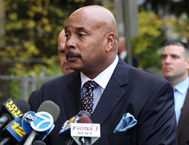



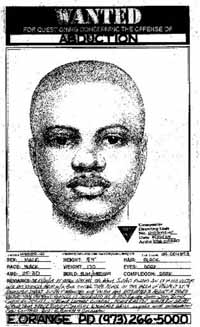

 Chuck
Canterbury, National President of the Grand Lodge, Fraternal Order
of Police, proudly announced that President George W. Bush signed
H.R. 218, the "Law Enforcement Officers' Safety Act," into law
earlier today.
Chuck
Canterbury, National President of the Grand Lodge, Fraternal Order
of Police, proudly announced that President George W. Bush signed
H.R. 218, the "Law Enforcement Officers' Safety Act," into law
earlier today. 


 Need information on police service weapons
and accessories...?
Need information on police service weapons
and accessories...?